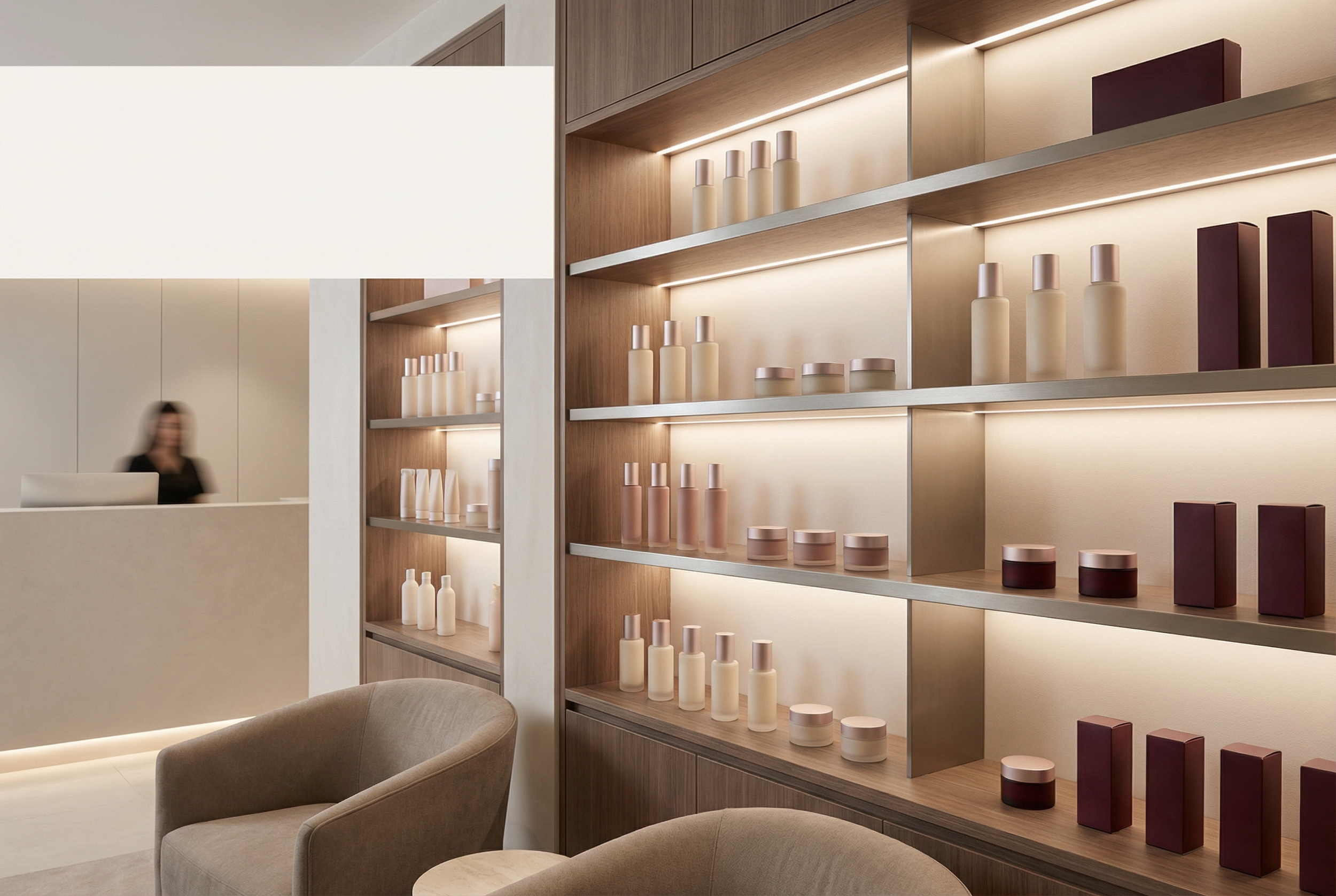
From Treatment Room to Instagram: How to Market Skincare as Part of the Patient Journey

A lot of practices still market treatments and skincare like they live in two completely separate worlds.

Treatments get the spotlight. Skincare gets the shelf.

Treatments get the before and afters, the provider explanations, the campaign pushes, and the dedicated social content. Skincare often gets whatever is left over: a product photo, a quick story, maybe a mention at checkout if someone remembers.

That disconnect is part of the problem.

Because if your practice believes skincare matters to results, then your marketing should reflect that.

Skincare should not feel like an afterthought, an impulse add-on, or the thing patients hear about only after they have already invested in the service. It should be positioned as part of the patient journey from the beginning.

And social media is one of the best places to do that.

Patients do not experience treatments and homecare separately

Practices may separate these categories internally, but patients do not always see it that way.

They are usually thinking about one thing:
How do I get the best result?

They are not mentally sorting their journey into neat buckets like treatment, retail, and compliance. They are looking for clarity on what actually helps.

That is why your content should connect the dots for them.

When social media treats skincare as part of the treatment story, patients start to understand that what they do at home matters too. Not as a side note. Not as a sales push. As part of the outcome.

That shift matters because it changes the role skincare plays in the patient’s mind.

Now it is not just a product recommendation. It is support.

If skincare supports results, market it that way

This is where a lot of content falls flat.

Practices will post beautiful treatment content, talk about collagen stimulation, texture, pigment, acne, healing, or post-procedure recovery, and then never explain how homecare fits into any of it.

That leaves a gap.

Because patients may understand the treatment, but still not understand:

  • what they should be using at home

  • what to avoid after treatment

  • how to support healing

  • how to maintain results

  • why certain products matter more after certain services

This is exactly where social media can be useful.

Instead of treating skincare like a separate retail category, treat it like part of the treatment education.

That is what makes it feel more medically relevant and more natural to recommend.

The strongest skincare content often starts with the treatment

One of the easiest ways to make skincare content feel more important is to anchor it to a service the audience already values.

This works because patients are usually more motivated by results than by products alone.

So instead of starting with:

  • here is a cleanser we love

  • this serum is one of our favorites

  • shop our skincare

Start with:

  • what to use after microneedling

  • how we support skin after laser

  • the homecare conversation we have after chemical peels

  • what patients using active acne treatments should know about their routine

  • why injectables patients still benefit from a good skincare strategy

That framing changes everything.

It makes skincare feel tied to the result, not disconnected from it.

This is also how you make retail feel less awkward

When patients only hear about skincare at checkout, it can feel abrupt.

Even if the recommendation is good, the timing can make it feel like an add-on instead of part of the care plan.

But when they have already seen content that explains:

  • why homecare matters after treatment

  • what categories support recovery or maintenance

  • why certain ingredients matter in specific situations

  • how treatments and skincare work together

the in-office recommendation feels much more natural.

Now the team is not introducing a random extra. They are reinforcing something the patient has already heard and already started to understand.

That is what makes the retail moment easier.

The best patient-journey skincare content usually falls into four categories

1. Pre-treatment education

This content helps patients understand what role skincare plays before a service ever happens.

Examples:

  • how to prep your skin before a peel

  • what to pause before treatment

  • why healthy skin barrier function matters before certain services

  • how homecare can help set the stage for better results

2. Post-treatment guidance

This is one of the strongest content categories because it feels highly practical and highly relevant.

Examples:

  • what to use after microneedling

  • what to avoid after laser

  • how to think about skincare during healing

  • the post-treatment products we recommend most often

This kind of content positions your practice as helpful, thoughtful, and invested in the result beyond the appointment.

3. Maintenance content

This is where you remind patients that treatment results still need support.

Examples:

  • how to maintain brighter skin after a series

  • why consistency matters more than intensity at home

  • what to keep using between visits

  • how homecare supports longer-term progress

Maintenance content is often what keeps skincare from being viewed as optional.

4. Myth-busting and expectation-setting

Patients are exposed to a huge amount of skincare misinformation online, especially when it comes to treatments and recovery.

This content helps bring clarity.

Examples:

  • why one treatment does not replace a routine

  • why overusing actives after treatment can backfire

  • why “medical-grade” is not the only thing patients should listen for

  • why more products does not always mean better results

This kind of content is useful because it protects both trust and outcomes.

Instagram should be reinforcing what the treatment room is already saying

This is really the bigger point.

Your social media should not be operating in a separate universe from your patient care.

If your providers are telling patients that skincare matters to healing, maintenance, pigment control, acne support, or barrier repair, your content should be reinforcing that message consistently.

Because when social media echoes the same ideas patients hear in the office, a few good things happen:

  • trust gets stronger

  • recommendations feel more familiar

  • compliance improves

  • patients are more likely to understand the value of homecare

  • skincare sales feel less random and more expected

That is when marketing starts supporting the patient journey instead of just documenting it.

This is where practices can differentiate

There are plenty of practices posting treatment content.

Fewer are doing a good job of connecting treatments, homecare, and patient education in a way that feels cohesive.

That is the opportunity.

If your practice can clearly explain not just what you do in-office, but how patients should think about supporting those results at home, you instantly sound more thoughtful, more complete, and more invested in the outcome.

That builds trust.

And trust is what makes both services and retail stronger.

Final thought

If skincare matters to patient results, it should matter in your marketing too.

The goal is not to force more product posts into your content calendar. The goal is to show patients that homecare is part of the bigger picture, not an afterthought at the end of the visit.

When social media helps connect the treatment room to the at-home routine, skincare starts to feel like what it should have been all along:

A natural part of the patient journey.

Why Social Media Is One of the Most Overlooked Tools for Growing Skincare Retail

A lot of practices still think about skincare retail and social media as two separate things.

Retail lives in the office.
Social lives on Instagram.
One is about products.
The other is about visibility.

That way of thinking is part of the problem.

Because in today’s market, social media is not just where patients discover your practice. It is where they decide whether they trust your point of view, understand your recommendations, and believe your team knows how to guide them.

That has everything to do with skincare retail.

The practices that grow skincare sales most effectively are usually not the ones posting the most product photos. They are the ones using social media to create clarity before the patient ever gets to checkout.

That is the real opportunity.

Most practices are separating two things that should work together

This happens all the time.

A practice invests in professional skincare, puts it on the shelves, trains the team on a few recommendations, and hopes patients will buy once they hear about it in the office.

At the same time, their social media is focused almost entirely on:

  • before and afters

  • treatment promotions

  • event announcements

  • trend-based posts

  • generic brand awareness content

Meanwhile, the products they want patients to trust and buy are getting almost no strategic support online.

That disconnect matters.

Because if your social media is helping patients understand treatments, it should also be helping them understand what supports those treatments. If it is building trust in your expertise, it should also be building trust in the skincare categories and recommendations your team stands behind.

When those two things stay disconnected, retail has to work much harder in the office.

Social media shapes what patients are ready to believe

This is one of the most important things practices underestimate.

By the time a patient hears a product recommendation in person, they are not starting from zero. They are bringing in everything they have already seen, heard, absorbed, and decided about skincare.

That includes:

  • what they believe about ingredients

  • what they think is worth paying for

  • what they assume is “basically the same”

  • what they have heard from influencers, friends, Sephora, TikTok, and Reddit

  • whether they see your practice as a trusted source or just another place selling something

Social media influences all of that.

So when practices ignore social as a retail tool, they are missing one of the biggest places patient belief is being shaped before the appointment ever happens.

Retail gets easier when the education happens earlier

A lot of in-office retail friction comes from poor timing.

The patient hears about a product for the first time at the very end of the visit. They are processing treatment information, looking at pricing, thinking about their schedule, and trying to leave. Now they are also supposed to quickly understand a skincare recommendation and decide whether to buy.

That is not ideal.

Social media can make that conversation easier by handling part of the education earlier.

When patients have already seen content about:

  • why homecare matters

  • how certain ingredients support results

  • what products are often recommended after specific treatments

  • what makes a professional recommendation different

  • why not all skincare is interchangeable

the in-office recommendation feels less abrupt.

Now your team is not introducing a brand-new concept under pressure. They are reinforcing something that already feels familiar.

That changes the entire tone of the retail moment.

Social media does more than promote products. It builds context.

This is where many practices get stuck.

They assume “using social media for retail” means posting more products.

It does not.

In fact, more product posts alone usually do very little.

What social media does best is build context.

It helps patients understand:

  • why a product exists

  • what role it plays in a routine

  • who it is for

  • what concern it supports

  • how it connects to treatment outcomes

  • why your team recommends it

That context is what makes a recommendation feel more credible.

A product without context feels like inventory.
A product with context feels like guidance.

That difference is everything.

Social media supports retail in four major ways

1. It builds trust before the recommendation

Patients are more likely to buy from a team they already see as informed, consistent, and credible.

2. It reduces confusion

When your content explains products, routines, ingredients, and treatment pairings clearly, patients have fewer unanswered questions when the recommendation happens in person.

3. It reinforces the same message across touchpoints

Patients may hear about a product on Instagram, then again in a consult, then again at checkout. That repetition builds familiarity and confidence.

4. It helps retail feel like patient care, not a separate sales effort

When skincare is consistently framed as part of results, maintenance, and homecare, it feels more natural and less transactional.

This is especially important in a crowded skincare market

Patients have no shortage of skincare options.

They can buy products almost anywhere. They can get advice from anyone. They are surrounded by claims, comparisons, trends, and opinions all day long.

That means the job of a practice is not just to stock good products.

It is to communicate better than the noise.

Social media gives practices a chance to do exactly that by showing patients not just what they carry, but how they think.

And that is what often separates trusted practices from forgettable ones.

If skincare matters to your business, it should matter to your content strategy

This is the simplest way to look at it.

If skincare retail is a meaningful part of your patient experience, your treatment outcomes, or your revenue mix, it should have a more intentional place in your marketing.

Not in a forced way. Not in a constant promo-heavy way. In a smart way.

That means your content strategy should include:

  • skincare education

  • routine guidance

  • treatment-pairing content

  • objection handling

  • myth busting

  • provider-led recommendations

  • homecare support content

Because if skincare is part of the business, it should be part of the communication strategy too.

The bigger opportunity is not just selling more products

It is building a practice where the messaging is more connected.

That is the real win.

When your treatment content, patient education, provider recommendations, and retail strategy all support each other, patients get a clearer experience. The team has an easier time reinforcing recommendations. Social content works harder. And retail starts feeling less like a last-minute add-on and more like a natural extension of the care plan.

That kind of alignment is what actually moves the business forward.

Final thought

Social media is one of the most overlooked tools for growing skincare retail because too many practices still see it as a visibility channel instead of a trust-building one.

But when social media helps patients understand your recommendations before they hear them in the office, retail gets easier.

Not because you posted more.
Because you communicated better.

And in a category as crowded and noisy as skincare, better communication is often what makes the sale possible in the first place.

Why Provider Recommendations Need a Better Retail Handoff

The actual moment of a sale happens quickly.

A patient says yes, checks out, and the transaction is complete.

But anyone who has worked in aesthetic retail knows the decision rarely happens in that moment alone. Most skincare sales are the result of a longer process built on trust, timing, education, and consistency across the team.

That is why retail success in an aesthetic practice is rarely about who is best at “selling.” It is about how well the team supports the recommendation from the first conversation through checkout and follow-up.

If the handoff breaks down at any point, the sale often goes with it.

It starts with the provider recommendation

In most practices, the recommendation should begin with the provider.

That is not because the provider needs to handle the entire retail conversation. It is because the provider is usually the person with the strongest clinical authority and the deepest trust with the patient in that moment.

When a provider connects a product recommendation to the patient’s concerns, treatment plan, or desired outcome, it frames the product as part of care rather than an afterthought.

That first step matters.

If skincare is introduced too early, too vaguely, or too abruptly, it can feel disconnected from the patient’s visit. But when the recommendation comes from the provider in a way that feels relevant and personalized, it creates the foundation the rest of the team can build on.

The handoff is where the sale is often won or lost

Once the provider makes the recommendation, the next step is critical.

If the nurse, aesthetician, coordinator, or front desk team does not clearly reinforce the same message, the patient can quickly become unsure about what they actually need and why it was recommended.

This is one of the biggest retail blind spots in aesthetic practices.

The issue usually is not the product. It is the inconsistency.

When each team member explains the recommendation differently, skips key details, or replaces it with their own version, trust can weaken and momentum can stall.

Strong retail systems rely on a smooth handoff where the patient feels like the entire team is aligned.

Education is what moves the patient closer to purchase

Most providers do not have time to walk through every detail of a product during the visit.

That is where support staff play an important role.

A well-trained nurse, aesthetician, or patient coordinator can help bring the recommendation to life by explaining:

  • what the product does

  • how to use it

  • why it was recommended

  • how it supports treatment results

  • what kind of consistency or timeline the patient should expect

This part of the process should feel educational, not pushy.

Patients are far more likely to move forward when they understand how a product fits into their plan and feel confident they can actually use it successfully at home.

Consistency builds confidence

A strong recommendation loses power when the messaging changes from person to person.

That is why consistency matters so much.

Every team member does not need to sound scripted, but they should be aligned on the essentials:

  • which products are priorities

  • who they are best for

  • how they support treatments

  • how they should be introduced to patients

When the message stays consistent, the patient feels reassured. When it shifts, the patient is left to sort through mixed signals.

That uncertainty can kill a sale that would have otherwise felt easy.

Follow-up is part of the retail process too

Not every patient is ready to buy the same day.

That does not mean the recommendation failed.

Sometimes people need time. They may want to think about it, finish what they are already using, revisit the conversation later, or purchase once they better understand the value.

That is why follow-up still matters.

A good follow-up can reinforce the original recommendation, answer any lingering questions, and help the patient return to a decision they were already considering.

Practices often do the hard part of starting the conversation, then miss the opportunity by failing to follow through.

Retail success is not just about what happens in the room. It is also about what happens after the visit.

Final thought

Successful skincare retail sales do not start at checkout.

They start with a trusted provider recommendation, gain momentum through staff education, and depend on a consistent handoff across the team.

When the provider, support staff, and front desk all communicate the same recommendation clearly and confidently, retail feels less awkward, more natural, and much more effective.

That is when skincare stops feeling like an extra sale and starts feeling like an extension of excellent patient care.

Why Your Social Media Should Be Selling the Skincare Conversation Before the Appointment

One of the biggest mistakes aesthetic practices make with skincare retail is waiting too long to talk about it.

For many practices, the skincare conversation does not begin until the patient is already in the treatment room, at checkout, or standing in front of a retail shelf on the way out. By then, the window is smaller, the patient is processing a lot of information, and the recommendation can feel like an add-on instead of a natural part of care.

If you want skincare retail to feel easier, more trusted, and more consistent, the conversation needs to start earlier.

It should start on social media.

Retail starts before checkout

Too often, practices treat retail like the final step of the visit. In reality, the best retail outcomes are usually shaped long before a patient ever reaches the front desk.

By the time someone comes in for an appointment, they have often already formed opinions about your practice, your expertise, and the types of treatments or products they believe in. Social media plays a major role in shaping that perception.

When your content regularly educates patients on skin concerns, treatment outcomes, ingredients, and homecare, you are building the foundation for future product recommendations. You are helping patients understand that great results do not begin and end with in-office treatment alone.

That is what makes the retail conversation easier later. The recommendation no longer feels random. It feels expected.

Social media builds trust before the recommendation ever happens

Patients are far more likely to trust a skincare recommendation when they have already seen your practice talk about skin in a way that feels clear, informed, and consistent.

This is one of social media’s most overlooked roles in aesthetics.

It is not just there to showcase before and afters or promote appointments. It can also act as an ongoing patient education channel that prepares people to better understand why skincare matters in the first place.

When patients repeatedly see content from your providers, nurses, or team explaining:

  • why certain ingredients matter

  • how to support treatment results at home

  • what common skincare mistakes to avoid

  • why not every product is interchangeable

they begin to see your recommendations as part of your expertise, not just part of a sale.

That trust compounds over time.

Pre-selling does not mean being pushy

The word “selling” can make some practices uncomfortable, especially on social media.

But pre-selling is not about posting product photos every day or pushing a hard call to buy. It is about using content to educate patients before they are in a decision-making moment.

Done well, this kind of content helps your audience connect the dots.

It shows them:

  • why homecare matters

  • why professional recommendations are different

  • why treatment results are often supported by what happens at home

  • why certain products may be worth asking about during their visit

That makes the in-office conversation feel more natural because patients are not hearing the idea for the first time.

What pre-selling skincare content can look like

A practice does not need complicated campaigns to start doing this well. In most cases, the strongest content comes from the same conversations your team is already having every day.

1. Routine-based content

Patients want to know what to use, when to use it, and how to layer it.

Simple routine content helps make skincare feel less intimidating and more actionable. It also helps patients understand where your recommended products fit into real life.

Examples:

  • morning routine for pigmentation

  • post-treatment evening routine

  • simple starter regimen for sensitive skin

  • three products we often recommend after microneedling

2. Ingredient education

Ingredient content helps patients understand the why behind product recommendations.

This is especially helpful if your practice carries professional skincare lines that may be less familiar to consumers than mass retail brands.

Examples:

  • what vitamin C actually does

  • who benefits from growth factors

  • when to use retinol and when not to

  • ingredients that help support the skin barrier

3. Treatment-pairing content

One of the easiest ways to make retail feel clinically relevant is to connect it to treatments your practice already offers.

This reinforces the idea that skincare is not separate from results. It supports them.

Examples:

  • the skincare we recommend after a chemical peel

  • how homecare supports better laser results

  • what to use after microneedling

  • why injectables patients still need a skincare strategy

4. Myth-busting content

Patients are constantly exposed to conflicting skincare advice online. That creates confusion, hesitation, and sometimes mistrust.

Myth-busting content helps position your practice as a clearer, more reliable source of guidance.

Examples:

  • medical-grade vs professional skincare: what actually matters

  • why more products is not always better

  • why not all retinols are the same

  • common reasons patients are not seeing results from their routine

Why this makes in-office retail feel easier

When skincare education is already happening on social media, the in-office recommendation feels less abrupt.

Instead of introducing a brand-new idea at checkout, your team is reinforcing something the patient has already heard, seen, or begun to understand. That familiarity matters.

It can lead to:

  • less resistance during product conversations

  • more informed patient questions

  • smoother provider-to-staff handoff

  • stronger trust in the recommendation

  • a more natural path to purchase

In other words, social media helps warm the conversation before the appointment ever begins.

Social should support the full patient journey

Practices often think about social media as a visibility tool. And it is. But it can also be a conversion tool when it supports the patient journey in a smarter way.

A patient may discover your practice through a reel, follow you for educational content, book because they trust your point of view, and then feel more comfortable purchasing skincare because the recommendation already feels familiar.

That is the bigger opportunity.

Not just using social to attract attention, but using it to build the kind of trust that makes better patient decisions and stronger retail performance possible.

Final thought

If your skincare retail strategy only begins once the patient is in the office, you are starting too late.

Social media can do important work before the appointment by educating patients, building trust in your recommendations, and helping homecare feel like a natural part of the results conversation.

That is when retail starts to feel less like a separate sales effort and more like an extension of patient care.

And that is usually when it works best.

Why Skincare Retail Sales Depend on Team Alignment in Your Practice

In an aesthetic practice, skincare retail sales rarely happen because one person gave a great recommendation.

They happen because the entire team supports the recommendation clearly, consistently, and confidently from the first conversation to the follow-up after the visit.

That is where many practices lose momentum.

A provider may recommend a product in the room, but if the handoff to the rest of the team is unclear, incomplete, or inconsistent, the patient may leave confused, overwhelmed, or unconvinced. And when that happens, even a strong recommendation can fall apart before it ever becomes a sale.

If you want stronger skincare retail performance, start by looking at the patient journey and the role each team member plays in supporting it.

Retail sales should start with provider trust

In most practices, the provider is the one who establishes trust first.

That matters because skincare recommendations land differently when they come from the person the patient sees as the medical expert. A recommendation from a provider carries weight. It signals that the product is not just an add-on, but a meaningful part of the patient’s treatment plan or home care routine.

Timing matters too.

If skincare is introduced too early or too abruptly, it can feel transactional instead of helpful. But when a provider naturally connects a product to the patient’s goals, concerns, or treatment outcomes, it feels more relevant and easier to trust.

The provider does not need to do the full retail conversation alone. They just need to anchor it.

The handoff is where many practices lose the sale

Once the provider makes the recommendation, the rest of the team needs to carry it forward without changing the message.

This is where breakdowns happen.

If the front desk, nurse, aesthetician, or coordinator explains the product differently, leaves out key details, or recommends something else entirely, the patient may start to question what they actually need. That confusion can quickly weaken trust and stall the purchase.

Strong skincare retail systems rely on a clean handoff.

The patient should feel like the team is aligned, not like they are hearing a different version of the recommendation from each person they encounter.

Education is what moves patients toward purchase

Most providers do not have the time to explain every detail about how a product works, how to use it, what to pair it with, or why it is worth purchasing from your practice.

That is why support staff play such an important role in skincare retail.

When trained well, nurses, aestheticians, and patient coordinators can help bring the recommendation to life by educating the patient in a way that feels clear and helpful, not pushy.

That education may include:

  • what the product does

  • who it is for

  • how to use it

  • how it supports treatment results

  • why this recommendation makes sense for the patient right now

This part of the process matters because patients often need more than a quick recommendation. They need context. They need to understand the value. And they need to feel confident using the product correctly once they leave.

Consistency builds confidence

One of the fastest ways to lose a retail sale is to let the message change from person to person.

If the provider says one thing, the nurse says another, and the front desk cannot answer basic questions, the patient is left to sort through mixed signals on their own.

Consistency is what makes the recommendation feel credible.

That does not mean every team member needs to memorize the same script word for word. It means the core message should stay aligned across the practice:

  • why the product was recommended

  • what problem it addresses

  • how it should be used

  • what the patient can expect

When the message stays clear, patients feel more certain in their decision.

Follow-up still matters

Not every patient is ready to buy on the same day.

That does not mean the recommendation failed.

Sometimes a patient needs time to think, compare options, finish a current product, or simply come back to the idea later. A strong retail process accounts for that by building in follow-up.

A simple follow-up can reinforce the recommendation, answer remaining questions, and remind the patient why the product was suggested in the first place.

This is where practices often leave money on the table. They do the hard part of making the recommendation, then stop short of supporting the decision after the visit.

Retail performance often improves when practices treat follow-up as part of the sales process, not an afterthought.

A simple question to ask your team

If you want to improve skincare retail sales, ask yourself this:

Would every person on my team explain our top recommended products in a way that feels aligned, clear, and trustworthy?

If the answer is no, the opportunity is not just to “sell better.” It is to build a better communication system around the recommendation.

Final thought

Successful skincare retail sales do not start at checkout.

They start with trust in the treatment room, grow through education, and depend on a consistent handoff across the team.

When your providers and staff are aligned in how they recommend, explain, and reinforce products, retail becomes less awkward, less inconsistent, and far more effective.

That is when skincare stops feeling like an extra sale and starts feeling like a natural extension of patient care.

The Best Social Media Content for Practices That Want to Increase Skincare Sales

A lot of practices say they want to sell more skincare on social media.

What they usually mean is they want patients to care about skincare before they are standing at the front desk half-listening, holding their keys, and mentally moving on with their day.

Because that is the real issue.

Most skincare content from practices is either too vague, too polished, too product-heavy, or too boring to actually move anyone toward a purchase. It looks nice, but it does not do the one thing it needs to do: make the recommendation feel relevant.

If you want social media to support skincare sales, your content cannot just show products. It needs to build belief.

It needs to help patients understand why the product matters, who it is for, what problem it solves, and why your practice is the one they should trust to guide them.

That is the difference between posting skincare content and using social media to actually support retail growth.

First, stop thinking like a seller

The practices that struggle most with skincare on social are usually making one of two mistakes:

They either avoid talking about products because they do not want to sound salesy.

Or they overcorrect and post a stream of flat lays, product shots, and generic captions that feel like an ad no one asked for.

Neither works well.

Patients do not need more product posts. They need more context.

The goal is not to make your page feel like a storefront. The goal is to make your audience smarter, more curious, and more confident in your recommendations before they ever come in.

That is what makes skincare sales easier later.

The best skincare content does one of four things

If a post is going to support skincare sales, it usually needs to do at least one of these four things:

  • answer a question

  • solve a problem

  • reduce hesitation

  • connect a product to a result the patient already wants

That is the filter.

If your skincare content is not doing one of those things, it may still be pretty, but it is probably not pulling much weight.

1. Educational content that makes patients feel smarter

This is the content category most practices need more of.

Educational content works because it shifts the conversation from “buy this product” to “here is what you need to understand.”

That makes patients more likely to trust the recommendation when it comes.

Examples:

  • why your pigmentation is not improving even though you are using skincare

  • what growth factors actually do

  • why post-treatment skincare matters more than people think

  • ingredients that are worth the hype and ingredients that are not

  • the mistake people make when they jump into retinol too quickly

This kind of content works especially well on reels, carousels, and talking-to-camera videos from providers, nurses, or aestheticians.

The key is to sound helpful, not rehearsed.

2. Product-in-context content

This is where most practices miss.

They show the product, but they do not explain where it fits.

Patients do not just want to know what a product is. They want to know:

  • when would I use this

  • why would I need it

  • what does it help with

  • is this for someone like me

That is why product-in-context content performs better than random product features.

Examples:

  • the serum we often recommend after microneedling

  • three skincare products we talk about all the time for dull skin

  • what we would use for a patient dealing with redness and barrier disruption

  • where this product fits into a simple anti-aging routine

  • what we recommend when a patient wants brighter skin but cannot tolerate aggressive products

This makes the content feel more like guidance and less like promotion.

3. Objection-handling content

This is one of the most overlooked skincare content categories, and it is one of the most valuable.

A lot of patients do not buy because they still have an objection they have not said out loud.

Usually it is one of these:

  • it is too expensive

  • I already use something similar

  • I do not think I need that many products

  • I am worried it will irritate my skin

  • I do not understand the difference between this and what I can get elsewhere

Your social content should be helping to soften those objections before the recommendation ever happens in-office.

Examples:

  • why professional skincare is not always interchangeable with what you buy at Sephora

  • why a simple regimen can still be highly effective

  • why the right product can save you money compared to wasting time on the wrong ones

  • what to do if your skin is “too sensitive” for active ingredients

  • the difference between using skincare casually and using it strategically

This content is powerful because it meets people where they actually are.

4. Treatment-pairing content

If you want skincare to feel medically relevant, connect it to treatments.

This is one of the easiest ways to make product recommendations feel more natural and more rooted in outcomes. Patients already understand that treatments have a purpose. Your job is to help them understand that homecare supports the result.

Examples:

  • what we recommend after a chemical peel

  • how to support your skin after laser

  • what to use at home if you are investing in microneedling

  • the skincare conversation we have with injectable patients all the time

  • why in-office treatments and at-home care should not be treated separately

This kind of content helps patients stop seeing skincare as an extra and start seeing it as part of the plan.

What practices should post more often

If skincare sales are a goal, I would prioritize these formats:

Talking-to-camera reels
Because trust sells better than polish.

Carousels
Great for breaking down routines, ingredients, myths, and common mistakes.

B-roll with strong educational text overlays
Perfect when your team does not have time for a lot of polished filming.

FAQ-style content
Because the questions patients ask every day are usually your best content prompts.

Before-and-after support content
Not product before-and-afters. More like content that explains what supported the outcome and how patients should think about maintenance.

What to stop posting

If you want better results from skincare content, I would post less of:

  • random product flat lays with no context

  • generic captions about “glowing skin”

  • overly branded promo posts with no educational value

  • content that assumes the audience already understands why the product matters

  • product features without a patient problem attached

Pretty content is fine. But pretty alone does not move product.

The bigger goal is not more product posts

It is better product communication.

That is what practices often miss.

The point of skincare content is not to turn your page into a catalog. It is to create a digital environment where your audience becomes more educated, more trusting, and more primed for the recommendation when it comes.

That is why the best skincare content does not feel like selling.

It feels like clarity.

And clarity is what makes patients more likely to buy.

Final thought

If your practice wants to increase skincare sales through social media, start by posting content that makes the recommendation make sense.

Teach more. Contextualize more. Handle objections earlier. Connect products to patient goals and treatment outcomes.

Because when your content does that, skincare stops feeling like a random product push at checkout and starts feeling like the next obvious step.

That is when social media actually starts supporting retail.

Why Professional Skincare Recommendations Build More Patient Trust

In aesthetics, trust is everything.

It influences whether a patient books again, follows through with treatment, refers friends, and ultimately sees your practice as a long-term resource rather than a one-time appointment.

Most practices think about trust in the context of bedside manner, treatment results, and patient experience. Those things absolutely matter. But there is another area that can either strengthen or weaken trust: your skincare recommendations.

When skincare is recommended thoughtfully, explained clearly, and matched to the patient’s goals, it becomes more than a retail moment. It becomes an extension of care.

Here are three ways skincare recommendations can help strengthen patient trust in your practice.

1. Trust grows when recommendations feel specific and professional

Patients want guidance they can believe in.

One of the biggest advantages an aesthetic practice has is the ability to make skincare recommendations based on real clinical knowledge, firsthand observation, and a deeper understanding of the patient’s skin, concerns, and treatment goals.

That kind of recommendation carries more weight than a generic suggestion at a beauty counter or a product picked up through trial and error online.

When a patient feels that your recommendation is thoughtful, specific, and based on their needs rather than a generic sales pitch, trust tends to grow.

2. Education makes the recommendation more credible

Patients are more likely to trust a recommendation when they understand the why behind it.

That is where education matters.

When your team explains how a product works, how to use it, what results to expect, and how it supports the patient’s broader treatment plan, the conversation becomes more useful and less transactional.

Education helps patients feel informed instead of sold to.

It also reduces confusion, improves compliance, and increases the chances that the patient will actually use the product correctly once they get home. And when patients understand how skincare fits into their outcomes, they are more likely to view the recommendation as part of expert care, not just an extra purchase.

3. Good recommendations help patients take action right away

Many aesthetic treatments take time to show results.

That is why skincare can play an important role in helping patients feel like they are leaving with a clear next step.

A well-timed recommendation gives patients something practical they can do immediately to support their skin between visits. That sense of direction matters. It helps bridge the gap between in-office treatment and at-home care, while reinforcing that your practice is thinking beyond the appointment itself.

In that way, skincare is not just a product sale. It is often part of helping the patient stay engaged in the process.

Trust comes from alignment, not just inventory

Of course, retail alone does not build trust.

Trust is built when the recommendation is appropriate, the explanation is clear, and the product genuinely supports the patient’s goals. If the recommendation feels rushed, inconsistent, or disconnected from the treatment plan, it can have the opposite effect.

That is why the strongest skincare retail programs are not built around pushing products. They are built around consistent recommendations, patient education, and a team that understands how to present skincare as part of the overall care experience.

Why this matters for aesthetic practices

Patients today have endless access to skincare options. What they are often missing is confident, credible guidance.

That is where practices can stand out.

When you combine clinical expertise with personalized recommendations and patient education, you create a more trustworthy experience and a stronger reason for patients to return to you for ongoing care.

Done well, skincare retail supports the patient, strengthens the relationship, and creates a more complete care model inside the practice.

Final thought

Skincare recommendations build trust when they feel helpful, informed, and aligned with the patient’s needs.

That is the real opportunity.

Not to “sell more” for the sake of selling more, but to use skincare as another touchpoint where your expertise, guidance, and patient care become even more visible.

When patients trust your recommendations, they are more likely to trust the rest of the journey too.

How to Turn Skincare Recommendations Into a Social Media Content System

Most practices are sitting on far more skincare content than they realize.

The problem is not that they do not know what to post. The problem is that they are treating content and patient communication like two separate things.

They are not.

If your providers, nurses, or aestheticians are recommending the same products, explaining the same ingredients, answering the same objections, and walking patients through the same routines every single week, that is content.

Not random content. Not filler content. Good content.

The kind of content that actually supports trust, strengthens patient education, and makes skincare sales feel more natural because the audience has already heard the recommendation before they ever step into the office.

This is where a lot of practices make content harder than it needs to be. They are chasing trends, scrambling for ideas, or overthinking production when the best content is often already happening in the treatment room.

You just need a system for capturing it.

Your recommendations are already telling you what to post

If a product or routine gets recommended once in a while, that is one thing.

But if your team is repeatedly talking about:

  • vitamin C for pigment

  • retinol for texture

  • growth factors after treatment

  • barrier repair after irritation

  • post-procedure homecare

  • the difference between hydration and correction

that is a signal.

It means those topics are clinically relevant, commercially relevant, and highly likely to matter to your audience.

In other words, your most common skincare recommendations are already showing you where your content should start.

The mistake practices make is waiting for someone to invent a clever idea from scratch instead of mining what is already being said every day.

Think like a content strategist, not just a content creator

A content system is different from posting when inspiration strikes.

A content system takes recurring recommendations and turns them into repeatable categories your team can film, write, and reuse over time.

That matters because one recommendation can become multiple pieces of content depending on how you frame it.

For example, if your providers regularly recommend vitamin C, that one recommendation could turn into:

  • a reel on who should use vitamin C

  • a carousel on common vitamin C mistakes

  • a story series on how to layer it in the morning

  • a talking video on why some people do not see results

  • a post connecting vitamin C to pigment or sun damage concerns

  • a post about when not to use certain actives together

That is the shift.

You are no longer asking, “What should we post this week?”

You are asking, “What are we already recommending, and how many ways can we educate around it?”

That is a much smarter starting point.

Start with your top recommended products and routines

If you want to build a content system that supports skincare sales, begin with the products, ingredients, and regimens your team talks about most.

A simple place to start:

  • top 5 most recommended products

  • top 5 most common skin concerns

  • top 5 post-treatment homecare conversations

  • top 5 patient objections or points of confusion

That gives you a real foundation.

Because now your content is no longer based on guesswork. It is based on what patients are already asking about and what your team is already trying to explain.

That is exactly the kind of content social media should be reinforcing.

The best skincare content usually fits into five buckets

Once you identify the recommendations you want to build around, turn them into content buckets.

1. The recommendation

This is the most direct version.

Examples:

  • the product we recommend all the time for dull, uneven skin

  • what we usually suggest for barrier support

  • our go-to post-peel skincare recommendation

This content works because it is simple and useful.

2. The why behind it

This is where you explain the reasoning.

Examples:

  • why we recommend growth factors after certain treatments

  • why dry skin and dehydrated skin are not the same

  • why a strong product is not always the right first step

This helps the audience understand the logic, not just the product.

3. The how to use it

This is often the missing piece.

Examples:

  • how to layer this into your current routine

  • how often to use it when starting out

  • what not to mix it with

  • what to expect in the first few weeks

This kind of content reduces hesitation and improves follow-through.

4. The objection

This is where you answer what patients are thinking but may not say out loud.

Examples:

  • “Do I really need this if I already use skincare?”

  • “Why can’t I just buy something similar somewhere else?”

  • “What if my skin is too sensitive?”

  • “Why is this one more expensive?”

This bucket is gold because it gets closer to conversion.

5. The treatment connection

This is where skincare becomes part of the outcome conversation.

Examples:

  • what we recommend after microneedling

  • how homecare supports laser results

  • the skincare conversation we wish every injectable patient understood

  • what to use after a peel and what to avoid

This is one of the easiest ways to make skincare feel less optional and more integrated into care.

One recommendation should become multiple assets

A lot of practices burn out because they think every post has to be new.

It does not.

A single recommendation should be stretched across formats.

For example, one topic can become:

  • one reel

  • one carousel

  • one story sequence

  • one email section

  • one blog mention

  • one saved highlight topic

  • one front-desk FAQ reference

This is how you stop constantly reinventing the wheel.

You are not creating more work. You are getting more value out of what your team already knows.

This also makes your social stronger from a trust standpoint

When patients hear the same ideas repeatedly across platforms and touchpoints, trust gets stronger.

They hear it on Instagram.
Then again in a reel.
Then again during a consult.
Then again at checkout.

That repetition is not redundant. It is reinforcing.

It makes the recommendation feel more familiar, more consistent, and more credible.

And that is part of what makes skincare sales easier. Not because patients were “sold to,” but because they were educated early and often enough to feel ready.

Final thought

If your practice is constantly struggling to come up with skincare content, stop looking for more random ideas.

Start paying closer attention to the recommendations your team is already making every day.

That is your content system.

Because the best skincare content is usually not invented from scratch. It is pulled from the real questions, real concerns, and real product conversations already happening inside the practice.

Once you start treating those conversations like content, social gets easier, your messaging gets stronger, and the path from recommendation to retail becomes a whole lot smoother.

The Number One Retail Rule Aesthetic Practices Should Not Ignore

One of the most common reasons skincare retail underperforms in aesthetic practices is simple:

It is not treated like a real part of the business.

Many practices carry skincare. Fewer have a clear plan for how that category is supposed to grow, what role it plays in revenue, how it connects to treatments, or how the team is expected to support it.

That gap matters.

Because if retail is only treated as a side shelf, an occasional add-on, or a nice extra at checkout, it will usually perform like one.

If you want skincare retail to become a meaningful and sustainable revenue stream, it needs to be approached with the same level of intention as any other part of the practice.

Retail needs its own strategy

Retail should absolutely connect to your broader business model, but it should not be buried inside it.

The biggest mistake practices make is assuming skincare will grow simply because the products are available. In reality, retail performs best when there is a dedicated plan behind it.

That plan does not need to be overly complicated. But it should answer a few important questions:

  • What role should skincare retail play in the business?

  • How much revenue should it contribute?

  • Which products are priorities?

  • How will the team recommend and support them?

  • How will retail be promoted across the patient journey?

When those questions are left unanswered, practices often end up overbuying inventory, undertraining staff, and hoping product sales happen organically.

Start with the goal, not the inventory

One of the smartest ways to build a retail plan is to start with the outcome you want.

Ask yourself:

What percentage of practice revenue should come from skincare retail?

From there, break that number down into monthly, weekly, and daily targets. Once you understand what success actually looks like, it becomes easier to build a plan around it.

This step matters because it shifts retail from a vague idea into something measurable.

Instead of saying, “We want to sell more skincare,” you are defining what “more” actually means for your business.

Then reverse engineer the rest

Once you know the goal, you can work backward and build the systems that support it.

1. Inventory and merchandising

Many practices make the mistake of purchasing too much inventory before they have a real strategy for moving it.

That approach can tie up cash, create pressure to push products in the wrong way, and leave the practice stuck with items that are not turning.

A better approach is to let your goals guide your inventory decisions.

Ask:

  • How much product do we realistically need on hand?

  • Which products support our most common treatments and concerns?

  • Which items deserve prime shelf placement?

  • What display setup makes the products easiest to understand and shop?

2. Team education

Retail performance is rarely about inventory alone. It is also about whether the team knows how to talk about the products clearly and confidently.

That means staff should understand:

  • what each product does

  • who it is for

  • how to use it

  • how it supports treatment outcomes

  • how to make the recommendation feel natural and aligned with patient goals

If the team is unsure, inconsistent, or hesitant, retail will stall no matter how good the products are.

3. Patient recommendation process

A strong retail strategy includes a clear plan for how products are recommended throughout the patient experience.

That may include:

  • provider recommendations in the treatment room

  • nurse or aesthetician education during the visit

  • front desk reinforcement at checkout

  • follow-up communication after the appointment

Retail tends to perform better when it feels like part of patient care rather than a last-minute sales push.

4. Promotions and marketing

Retail should also have a place in your larger marketing calendar.

That does not mean constant discounts. It means being intentional about when and how you spotlight products through:

  • seasonal campaigns

  • treatment pairings

  • staff favorites

  • regimen education

  • post-procedure recovery guidance

  • email and social content

When skincare is consistently woven into patient education and practice marketing, it becomes easier for patients to understand its value.

Why this matters

When practices skip the planning stage, they often end up reacting instead of leading.

They buy too much. They promote inconsistently. They rely on a few team members to carry the category. And they wonder why retail never becomes a stronger part of the business.

But when retail has a clear goal, a realistic plan, and team-wide support, it can become much more than an extra offering.

It can become a more predictable revenue channel and a stronger extension of the care experience you already provide.

Final thought

The number one retail rule aesthetic practices should not ignore is this:

Do not treat skincare retail like an afterthought.

Treat it like a real business unit with goals, systems, and accountability.

Because once you do that, it becomes much easier to make smarter inventory decisions, train your team more effectively, and build a retail program that actually supports long-term growth.

Why Your Best-Selling Skincare Products Need Better Social Support

A lot of aesthetic practices are sitting on good products with bad communication.

Not bad because the products are not effective. Bad because the content around them is doing almost none of the heavy lifting.

The practice carries great skincare. The providers recommend it. The team believes in it. Patients may even buy it once. But the digital support around those products is so thin, inconsistent, or generic that the products never build the kind of familiarity and trust they need to sell more easily over time.

That is the real issue.

Because in today’s market, carrying strong skincare is not enough. Recommending it once is not enough either. If patients are going to understand why a product matters, remember it later, and feel confident buying it, your social media has to help do that work.

Great products still underperform when the communication is weak

This is one of the biggest disconnects in aesthetic practices.

A team may be fully convinced that a product is excellent, but the patient only sees a box on a shelf, a quick mention during checkout, or a random product post with no real context.

That is not enough to build belief.

Patients are not buying based on your inventory list. They are buying based on what they understand, what they trust, and what feels relevant to their goals.

So when a product underperforms, it is not always because the product is wrong. Sometimes it is because the communication around it is too light.

Most hero products are not getting hero treatment online

Every practice has them.

The products providers recommend all the time. The ones that support treatment results. The ones patients ask about again later. The ones that actually deserve more visibility because they solve real problems.

And yet on social, those same products often get treated like background props.

They show up in:

  • a random flat lay

  • a shelfie in the lobby

  • a holiday promo graphic

  • a quick story mention with no explanation

That is not social support. That is product placement.

If a product is one of your top recommendations, it needs content that actually helps the audience understand why it matters.

Your social media should be building familiarity before the recommendation happens

One of the biggest jobs social media can do for retail is make a product feel familiar before the patient ever hears about it in person.

That familiarity matters more than practices realize.

When a patient has already seen:

  • what the product helps with

  • who it is for

  • how it fits into a routine

  • why your team recommends it

  • how it connects to treatment results

the in-office conversation feels easier.

Now the recommendation is not coming out of nowhere. It feels connected. It feels reinforced. It feels like something they have already started to understand.

That is the real value of social support.

What better social support actually looks like

It does not mean posting more product photos.

It means building better product communication.

Here is what that actually looks like.

1. Show the product in context

Do not just post the bottle. Explain where it fits.

Patients want to know:

  • what problem it helps solve

  • when they would use it

  • who it is best for

  • what it pairs well with

  • why it may be worth asking about

A product with context feels more useful. A product without context just feels like something you are trying to sell.

2. Make the recommendation make sense

The best skincare content does not just say what the product is. It explains why your team reaches for it.

Examples:

  • why this is one of our most recommended products after microneedling

  • why we talk about this one all the time for dull, uneven skin

  • why this product tends to do well for patients with sensitive skin who still want results

That kind of explanation builds trust because it sounds like guidance, not promotion.

3. Repeat the message more than once

A lot of practices mention a product once and assume that was enough.

It was not.

Patients need repeated exposure before something sticks. Especially in skincare, where they are already flooded with options, marketing claims, and conflicting advice from every direction.

If a product really matters to your practice, it should not appear once every few months and then disappear.

It should show up repeatedly in different ways:

  • educational reels

  • routine content

  • FAQ posts

  • stories

  • treatment-pairing posts

  • objection-handling content

Repetition builds familiarity. Familiarity builds trust.

4. Tie products to real patient goals

Patients do not wake up wanting “product education.”

They want clearer skin. Less redness. Better texture. More glow. Better results from the treatments they are already paying for.

That means your content should start with the goal, not the SKU.

Instead of posting:

  • our favorite serum this month

Post:

  • what we often recommend when a patient wants brighter skin without overdoing it

  • the type of product we use to support recovery after treatment

  • why this category matters if you are serious about pigment correction

Patients connect faster when the content speaks to their problem first.

The biggest mistake is assuming a good product sells itself

It does not.

Not in today’s market.

There is too much noise, too much sameness, and too much skincare content online that says very little.

Even strong products need support.

They need a team that can explain them well.
They need providers who connect them to patient goals.
And they need social media that helps the audience understand why the recommendation matters before the patient is standing at checkout trying to make a decision in thirty seconds.

That is what digital support is for.

If a product matters in-office, it should matter in content too

This is the simplest filter.

If your team recommends it often, talks about it often, or believes it plays an important role in patient results, it should have a stronger presence in your content strategy.

Not because every post should be about products.

But because the products that matter most should not be left to survive on one quick mention in the room and a shelf display in the lobby.

Your content should be helping those recommendations land.

Final thought

A lot of practices do not have a product problem.

They have a product communication problem.

Their best-selling or best-performing skincare products are not getting enough digital support to build familiarity, trust, and relevance before the recommendation happens in person.

That is the opportunity.

Not to post more just for the sake of posting, but to create smarter content around the products your practice already believes in most.

Because when your social media helps patients understand the recommendation before they hear it in-office, retail starts to feel a lot less forced and a lot more natural.

Why Your Retail Display May Be Hurting Skincare Sales in Your Practice

Retail sales can be a meaningful revenue stream for aesthetic practices, but they rarely grow on their own.

One of the biggest misconceptions in aesthetics is that simply placing skincare on a shelf is enough to generate sales. In reality, retail performs best when the display, the patient experience, and the provider recommendation all work together.

If your team believes in the products but your retail area feels cluttered, inaccessible, or easy to ignore, you may be losing sales before the conversation even starts.

A strong retail display does more than hold products. It signals credibility, reinforces your recommendations, and makes it easier for patients to say yes before they leave the office.

If your skincare retail area needs a refresh, start here.

Why retail display matters in an aesthetic practice

Patients are constantly reading the room.

A clean, organized, well-stocked display helps communicate that your practice stands behind the products it recommends. On the other hand, empty shelves, hidden products, or locked cabinets can create friction and uncertainty.

Think about any retail environment you trust. Products are visible. Bestsellers are easy to find. Shoppers can explore without feeling awkward or inconvenienced.

The same principle applies in aesthetics. When retail feels intentional and easy to shop, patients are more likely to browse, ask questions, and purchase.

1. Keep your shelves stocked, but not overcrowded

The number of products on display matters.

If the shelf looks sparse, patients may assume products are old, unpopular, or not a meaningful part of your business. If it looks overcrowded, the display can feel messy and overwhelming.

A practical rule is to keep enough product out to make the display look active and maintained without making it feel cluttered. In many cases, having a few units of each featured product on display is enough to create a healthy, shoppable look.

Just as important: make products easy to access.

If patients have to ask someone to unlock a cabinet or retrieve a product from a drawer, that extra step can lower purchase intent. Skincare should feel approachable, not guarded.

What to check:

  • Are shelves full enough to look healthy and intentional?

  • Are products easy to reach?

  • Does the display feel clean and edited rather than crowded?

2. Put your testers out

Testers are one of the easiest ways to improve retail performance.

When patients can touch a moisturizer, pump a serum, or experience the texture of a product themselves, the recommendation becomes more tangible. That sensory interaction can help move someone from curiosity to confidence.

Practices sometimes avoid putting testers out because they worry about waste or theft. In most cases, that fear costs more than it saves. Patients are more likely to buy products they can experience firsthand, and many skincare reps can help support practices with tester units.

If you want patients to engage with retail, make it interactive.

Best practices for testers:

  • Keep testers visible and easy to identify

  • Replace messy or empty testers quickly

  • Wipe down the area often so it always feels clean

  • Train staff to invite patients to try hero products during checkout or post-treatment conversations

3. Use eye-level placement strategically

Not every product deserves the same shelf position.

The products you most want to sell should sit where patients can actually see them. Eye-level placement is valuable real estate, and it should usually be reserved for high-priority products such as treatment serums, corrective products, or top-margin favorites.

Lower-commitment items like cleansers, lip products, or smaller add-ons can still perform well in secondary placement areas such as checkout, treatment room counters, or gift-with-purchase moments.

The goal is to make your most important products the easiest ones to notice.

Think strategically about placement:

  • Put hero products at eye level

  • Group products by concern, routine, or category

  • Use signage sparingly and only where it adds clarity

  • Avoid overdecorating the retail space

A good rule: the display should support the products, not compete with them.

A simple retail display checklist for aesthetic practices

If you want a quick retail reset, start here:

  • Make sure the display looks stocked and maintained

  • Remove unnecessary clutter

  • Put testers out and keep them clean

  • Move priority products to eye level

  • Make shopping feel easy and natural

  • Train your team to reinforce product recommendations verbally

Final thought

Retail success in aesthetics is not just about what you sell. It is about how confidently and consistently you present it.

When your display feels organized, accessible, and intentional, it becomes easier for patients to trust your recommendations and easier for your team to support the sale.

Small changes in presentation can make a meaningful difference in retail performance, especially when paired with strong patient education and a staff that knows how to guide the conversation.

3 Smart Ways to Reinvest Skincare Retail Revenue in Your Practice

When skincare retail starts performing well, the opportunity is bigger than just adding another line item to the monthly revenue report.

Done strategically, retail revenue can help fund growth across the rest of the practice.

That is where many businesses miss the bigger picture. They focus on the immediate win of stronger product sales, but do not always think through how those dollars can be reinvested to improve capacity, patient experience, and long-term performance.

If you want skincare retail to support sustainable growth, reinvestment matters.

Here are three of the smartest places to direct that revenue inside an aesthetic practice.

1. Strengthen your treatment offering

Services are still the core of most aesthetic practices.

That means one of the most strategic uses of additional retail revenue is reinvesting in the treatment side of the business, whether that means upgrading equipment, improving existing service delivery, or expanding into new offerings that align with patient demand.

This type of reinvestment can create a compounding effect.

When the treatment menu becomes stronger, the patient experience improves. When the patient experience improves, trust grows. And when trust grows, it often becomes easier to recommend supportive skincare that extends results at home.

In other words, retail can help strengthen services, and stronger services can help support even better retail performance.

Examples of reinvestment in this area might include:

  • upgrading aging equipment

  • adding technology that supports a growing category of demand

  • improving treatment-room tools or workflow

  • expanding into services that pair naturally with homecare recommendations

2. Invest in team capacity and staff development

Growth creates pressure.

As patient demand increases, many practices feel the strain before they fully understand what is happening. Schedules get tighter. Staff members get stretched. Follow-up becomes inconsistent. The patient experience can start to slip.

That is why staffing is one of the smartest areas to reinvest in.

Retail revenue can help support:

  • additional hiring

  • better training

  • stronger patient coordination

  • improved support for providers

  • a more consistent front desk and checkout experience

It can also create room for more intentional staff education around skincare recommendations, product knowledge, and patient communication.

When your team has the time, clarity, and training to support both services and retail well, the practice becomes easier to scale.

3. Build the systems that support future growth

Once core services and staffing are supported, retail revenue can also be reinvested into the surrounding systems that help the business grow more efficiently.

This is often where practices create the next level of momentum.

A few smart reinvestment opportunities include:

Improve the retail experience

If your practice has only been selling skincare casually or from a small shelf behind the desk, reinvesting into a more intentional retail space can make a real difference.

A better retail area can:

  • make products easier to browse

  • support stronger merchandising

  • reinforce brand trust

  • create more natural product discovery before and after appointments

Create smarter staff incentives

If retail is going to be a team effort, the team should feel invested in its success.

A thoughtful incentive structure can encourage consistency, improve buy-in, and make product recommendations feel like part of a shared goal rather than an awkward extra responsibility.

The key is to reward the right behaviors, not just one-off sales.

Support expansion opportunities

In some practices, strong retail performance can also help support larger growth goals over time, including marketing upgrades, expanded square footage, or eventually opening an additional location.

Retail may not be the only factor funding that growth, but it can absolutely become part of the engine behind it.

Why reinvestment matters

The real value of skincare retail is not just the transaction itself.

It is what that revenue makes possible when it is used intentionally.

Instead of seeing retail as “extra,” practices should think of it as a category that can help strengthen the broader business when managed well. The more strategically you reinvest, the more likely retail is to support long-term practice growth rather than short-term wins alone.

Final thought

Skincare retail revenue can do more than increase monthly sales.

It can help fund stronger services, support a better team experience, and build the systems that make future growth possible.

That is when retail becomes more than a shelf of products in the lobby.

It becomes a meaningful contributor to the long-term health of the practice.

How Instagram’s Reels Algorithm Really Works—and How Aesthetics Practices Can Use It to Their Advantage

Instagram recently revealed how their Reels algorithm actually works, and if you’ve been prioritizing sends and shares, you might need to rethink your strategy. Many brands and practices have been focusing heavily on shares, but Instagram’s Head, Adam Mosseri, just clarified what really matters.

Let’s dive into the algorithm’s top priorities and how you can leverage them to grow your practice’s presence.

The 3 Key Reels Metrics That Matter:

While shares are important, they’re not the #1 factor. The three metrics you should focus on are:

  1. Average Watch Time – The longer people watch your Reels, the better. Instagram sees this as a sign of quality content.

  2. Likes Per Reach – Engagement through likes signals that viewers are enjoying your content.

  3. Sends Per Reach – Sharing helps with discovery, but it’s not the sole driver of visibility.

Knowing these priorities helps you craft a content strategy that resonates with both your existing followers and potential new clients.

Connected vs. Unconnected Reach—What’s the Difference?

Instagram treats your followers differently from potential new audiences. Here’s how:

  • Connected Reach (Followers): Likes are weighted more heavily than sends.

  • Unconnected Reach (New Audiences): Sends carry more weight than likes.

This means your loyal followers are more likely to engage through likes, while new audiences rely on social proof from shares.

How to Optimize Your Aesthetic Practice’s Reels

Instead of getting lost in the algorithm rabbit hole, focus on these core elements that actually work:

  1. Creative That Stops the Scroll

    • Use bold visuals, interesting hooks, and showcase real results from your treatments.

  2. Compelling Hooks

    • Whether it’s eye-catching visuals, trending audio, or an intriguing story, grab attention in the first 3 seconds.

  3. Right-Length Content

    • Don’t force a 90-second Reel if you can get the message across in 30 seconds. Quality > quantity.

  4. Emotional Storytelling

    • Highlight how your treatments boost confidence and enhance lives—not just the technical aspects.

The Bottom Line? Focus on Content That Converts

At the end of the day, if your content isn’t getting seen, it’s not because the algorithm is against you—it’s because it’s not hitting the right notes. Stay focused on the fundamentals, create content that resonates with your audience, and the algorithm will follow suit.

Want more strategies to level up your social media game? Follow Aesthetic Influencer for expert tips tailored to aesthetics professionals or for a stress-free prescription for social, join Reels Rx for our Aesthetics BFFs.

Trends: The Cherries on Top of Your Content Cake

If you’re an aesthetics pro, you know that creating great content for Instagram is non-negotiable. But let’s face it: juggling patients, treatments, and social media can feel like trying to spin 10 plates at once. That’s where trends come in. They’re the cherries on top of your content cake—a sweet addition that makes your content stand out while drawing more people to your page. 🍒✨

But let’s get one thing straight: trends are just one piece of the content strategy puzzle. They’re the fun, flashy moments that invite more people to the party on your page, but your core content—the educational, transformational, and trust-building posts—are the heart of your strategy. Here’s how trends fit into the mix (and how you can use them without sacrificing your professional vibe).

Why Trends Work for Aesthetics Pros

1. They Boost Visibility

Instagram LOVES trends. Whether it’s a catchy audio clip, a trending hashtag, or a viral challenge, Instagram’s algorithm pushes this content to more users. For aesthetics professionals, this means trends can amplify your reach and attract new patients who might not have stumbled across your page otherwise.

Think of your educational posts as the foundation of your house. Trends are the fun decor that makes people stop and say, "I NEED to check this out!"

2. They Make You Relatable

Patients want to see the person behind the syringe, the laser, or the skincare recommendation. Trends are an easy way to let your personality shine through while still showcasing your expertise. Whether it’s a humorous take on filler myths or a clever use of trending audio to highlight your day in the office, trends make you approachable and human.

Pro Tip: Pick trends that align with your brand vibe. If a trend feels too silly or off-brand, skip it! Not every trend is made for your aesthetic (pun intended).

3. They Simplify Creativity

We’ve all been there: staring at a blank screen, wondering what to post. Trends give you a plug-and-play formula for creating content without reinventing the wheel. Add your own twist—like patient transformations, before-and-afters, or a behind-the-scenes look at your practice—to make trending content work for you.

Bonus: They’re FAST to create! With the right framework, you can knock out a trending reel in under 15 minutes.

Trends Are the Side Dish, Not the Main Course

While trends can be game-changing for visibility and engagement, they’re not the whole strategy. Your core content—like posts that educate, inspire, and build trust—is what truly converts followers into patients. Trends enhance your strategy but should never overshadow the value you’re consistently delivering.

Think of it this way: Your educational content is the main course of a five-star meal. Trends are the sprinkles of fun that get everyone talking about the dessert.

Your Trend Prescription: Reels Rx

Ready to make trends work for you without the overwhelm? Stay tuned for the launch of Reels Rx, the ultimate guide to mastering trends and turning them into growth for your aesthetics business. Here’s what’s inside:

★ Trending audio ideas tailored specifically for aesthetics pros.

★ Content ideas that align with your brand and expertise.

★ Planning tips so you can batch and post content stress-free.

Reels Rx is designed to help you amplify your strategy, save time, and grow your audience. Whether you’re a seasoned aesthetics baddie or new to the industry, ReelsRx will help you turn trends into traffic and superfans.

Stay Tuned for More

Trends are just the beginning, besties. With Reels Rx, you’ll have the tools you need to blend trends seamlessly into your strategy and grow your brand authentically. Subscribe to stay updated, and let’s make your Instagram strategy as flawless as your treatments.

Got questions about trends or struggles with creating content? DM @aestheticinfluencer on Instagram— here to help! 🍒✨

21 Hard for Aesthetics Solopreneurs: Your Guide to Social Media Success in 2025

Let’s face it—social media can feel overwhelming. Between running your practice, seeing patients, and balancing life, finding time to create consistent content often feels impossible.

You’re not alone. Many aesthetics professionals struggle to stay consistent, even when they know how important social media is for growing their brand.

That’s exactly why I created Reels Rx, a subscription service designed to simplify content creation for busy aesthetics solopreneurs. Reels Rx is more than just a tool—it’s your accountability partner, content coach, and a community of like-minded professionals cheering you on every step of the way.

But before we dive into Reels Rx, I want to invite you to something special to kick off the new year:

Introducing 21 Hard for Aesthetics Solopreneurs

This is a 21-day social media challenge to help you:
✅ Build your brand
✅ Simplify your content creation process
✅ Gain confidence in showing up consistently online

Whether you’re a solopreneur running your own practice or building your personal brand within one, this challenge will help you stay on track and finally turn social media into a habit that sticks.

Why 21 Days?

Research shows it takes 21 days to form a habit. We also know that it’s easy to feel stuck or unsure about what to post. That’s where this challenge comes in—to help you take those first steps and create a foundation for your social media success.

Here’s How It Works:

For 21 days, we’ll guide you through:

  • Daily prompts to spark content ideas and keep you consistent

  • Actionable strategies tailored for busy aesthetics professionals

  • Community accountability to keep you motivated

At the end of 21 days, you’ll have:

  • A clearer content strategy

  • Confidence in your ability to show up online

  • The momentum you need to carry into 2025

Why Join?

Because you deserve to invest in yourself and your growth. Whether you’ve stopped and started dozens of times or promised yourself you’d start tomorrow, this is your chance to finally make it happen.

Let’s kick off 2025 by building habits that stick, showing up for your audience, and making your social media presence a powerful tool for your brand.

Are you ready to join us?

Shoot us a DM on @AestheticInfluencer or subscribe to Reels Rx for even more strategies, tools, and community support.

Let’s do this together. 💪

Sell the Result, Not the Treatment: How to Connect with Patients Through Authentic Content

Sell the Result, Not the Treatment: How to Connect with Patients Through Authentic Content

As an aesthetics professional, you likely didn’t get into this field because you wanted to sell. You’re passionate about helping people feel confident and empowered, not about convincing them to book a treatment. But the reality is that selling—whether it’s in person or through your social media—is a necessary part of growing your practice and serving your patients.

The good news? Selling doesn’t have to feel like selling. By focusing on the results your treatments provide and connecting with patients on an emotional level, you can remove the “icky” feeling and build genuine trust. And here’s the secret: this approach doesn’t just work during consultations. It’s also the key to creating content that inspires your audience and fills your schedule with the right patients.

Why Patients Buy with Emotion, Not Logic

Studies show that people make decisions emotionally and justify them with logic. When a patient decides to book a treatment, it’s not just about the science of dermal fillers or the specs of your laser—it’s about how that treatment will make them feel. Maybe it’s the confidence to step into a room and own it, or the comfort of looking in the mirror and recognizing themselves again.

Your job isn’t to sell the syringe or the laser—it’s to show how these tools can help your patients achieve their goals. The same applies to your content: instead of focusing on the technicalities of a treatment, focus on the emotional transformations it creates.

Reframing Selling as Guiding

One of the biggest hesitations aesthetics professionals have is the fear of coming across as “salesy.” But when you shift your mindset from selling to guiding, everything changes. You’re not pushing a treatment; you’re helping patients understand how it aligns with their personal goals and desires.

This mindset shift doesn’t just apply to patient consultations. It’s also how you should approach your social media content. Instead of posting “Buy now” messages or generic promotions, think about how you can guide your audience toward understanding the value of what you offer.

How to Create Trust-Building Content

Your social media is often the first interaction potential patients have with your practice. It’s your opportunity to show them not just what you do, but how you can help them feel like the best version of themselves. Here’s how to do it:

1. Highlight Emotional Transformations

Instead of focusing on the procedure, focus on the outcome. Share before-and-after photos that tell a story, like how a treatment helped someone feel confident for their wedding day or regain their youthful glow. Use captions to describe the emotions behind the transformation.

2. Educate and Empower

Content that educates your audience builds trust and positions you as an expert. Break down complex treatments into simple, relatable terms. Address common fears or misconceptions. For example, instead of saying, “We offer microneedling,” explain how microneedling can improve skin texture and boost confidence.

3. Share Stories

Stories resonate. Whether it’s a patient’s journey (with their permission, of course) or your own “why” for entering the field, stories create connection. People want to feel like they’re in good hands with someone who truly cares.

4. Answer the "Why"

Every piece of content you create should answer the question: Why does this matter to my audience? Why should they care about this treatment? Why should they trust me to guide them? When you consistently address the “why,” you’ll attract patients who align with your values and approach.

5. Focus on Connection, Not Conversion

Don’t approach content creation with the sole goal of “getting more bookings.” Instead, think of it as building relationships. When you focus on connecting with your audience and showing them you understand their needs, the bookings will follow naturally.

Turning Followers into Patients

When you shift your focus from selling treatments to showcasing results, you’ll notice a change in how patients respond to you—both online and in person. Your social media will stop feeling like a chore and start feeling like an extension of the care you provide in your practice.

By showing your audience the emotional transformations you can help them achieve, you’re not just creating content—you’re building trust. And trust is what turns followers into patients and consultations into confident “yes” decisions.

So the next time you sit down to write a caption or film a video, remember: you’re not selling a treatment. You’re guiding someone to see how they can feel radiant, confident, and like the best version of themselves. And that’s the kind of “selling” that never feels icky.

Stop Doing These 5 Things on Social Media in 2025 (Aesthetic Professionals Edition)

In the fast-paced world of aesthetics, social media is your digital storefront. But if you're still using outdated tactics, you’re holding your brand back. Here are five habits to break this year to maximize your impact:

1. Posting Without a Plan

Throwing random posts at your feed is like throwing darts blindfolded. Define your goals—whether it’s educating patients, booking more consultations, or establishing your expertise. A consistent strategy builds trust, and trust leads to appointments.

2. Ignoring Video Content

Short-form video is essential. Platforms like Instagram Reels and TikTok aren’t trends—they’re where your audience is. If you’re not leveraging video to educate or connect, you’re leaving potential patients behind. Start with simple FAQs or highlight your services.

3. Using Only Stock Content

Stock photos lack the personal touch. Patients want to see the real people behind the practice—your team, your work, and your results. Prioritize creating original content that tells your unique story.

4. Not Engaging with Your Audience

Social media isn’t a one-way street. Responding to comments, answering DMs, and engaging with your followers fosters trust and builds relationships. Your audience is your future patient base—make them feel heard.

5. Not Showing Your Face on Camera

Patients connect with people, not logos or polished graphics. Step in front of the camera to build trust and rapport. Share behind-the-scenes moments, insights into your practice, and what makes you unique.

Breaking these habits can transform your social media presence and help you grow your practice. Which one will you stop doing in 2025?

The Biggest Social Media Mistake Aesthetics Businesses Make and How to Fix It

When it comes to social media, aesthetics businesses often fall into the trap of posting content that’s overly formal, stiff, sales-oriented and, frankly, boring. They treat their social media channels like traditional business platforms, focusing solely on promoting services and products without any personality or engagement. This approach not only feels stale but also fails to connect with the audience on a personal level. The reality is that marketing is changing, and the way we connect with our audiences is becoming more authentic, raw, and unfiltered—especially if you’re marketing on platforms like TikTok.

The Shift Towards Authenticity

The social media environment today demands authenticity. Audiences crave genuine connections and real stories. They are no longer satisfied with just polished product photos that look like an ad from the marketing portal of your device partner or heavily text-based posts of your monthly promotions. This is where many aesthetics clinics miss the mark. They focus too much on promoting services and products without showing the human side of their practice. This not only bores the audience but also disengages potential customers.

The Power of Human Connection

Aesthetics clinics aiming for growth need to pivot their content strategy to include more of the people behind the practice. Sharing your story, daily life, and relatable moments can significantly enhance your brand’s appeal. It's about building a narrative that your audience can connect with on a personal level.

Consider the success story of FAYT the Label, a brand from Australia that has flourished by centering its marketing strategy around the founder who actively engages with the audience daily. This approach has not only strengthened brand recognition but also fostered a loyal customer base.

Implementing an Authentic Strategy

Transitioning to a more authentic and engaging content strategy might feel unprofessional initially, but the results speak for themselves. Here’s how you can start:

  1. Showcase Your Team: Highlight the people behind your practice. Share their stories, roles, and what a typical day looks like for them. This personal touch helps humanize your brand.

  2. Behind-the-Scenes Content: Give your audience a sneak peek into your daily operations, the preparation for treatments, or how you maintain a sterile and welcoming environment. This transparency builds trust and interest.

  3. Share Your Journey: Talk about the journey of your clinic, from its inception to the present day. Share the highs, the lows, and everything in between. This narrative makes your brand more relatable and memorable.

  4. User-Generated Content: Encourage your clients to share their experiences and tag your clinic. Sharing these posts not only provides authentic content but also fosters a sense of community.

  5. Educate, Don’t Just Sell: Provide valuable information about skincare, treatments, and wellness. Educating your audience helps establish you as an authority in your field and builds trust.

The Results of Authentic Engagement

By integrating more personal, relatable content, you create a more engaging and dynamic social media presence. This approach not only enhances brand recognition but also builds a community of loyal followers. Remember, more fun and connection ultimately lead to more sales. Your audience wants to feel like they know you, not just your services.

So, the next time you plan your social media content, think beyond the sales pitch. Show the heart and soul of your practice, and watch your engagement—and business—grow.

From Local Practitioner to Aesthetic Authority: Building Authority and Visibility Locally

In the competitive world of aesthetics, establishing your authority and increasing your visibility in your local market is crucial to becoming the go-to in your area. With the rise of social media and digital marketing, patients are more informed and have higher expectations than ever before. They seek out practitioners who are not only skilled but also credible and visible within their community.

For aesthetics professionals, this means that traditional marketing methods alone aren't enough. To stand out and attract a loyal client base, you need to leverage modern marketing strategies that build your reputation as an expert and enhance your presence both online and offline.

Here are some proven strategies to help you achieve these goals and elevate your practice to new heights:

Content Marketing

Educational Blog Posts and Evergreen Content:

Evergreen content is content that remains relevant and valuable over a long period of time, unlike time-sensitive content that may become outdated quickly. For example, a blog post about "The Benefits of Hyaluronic Acid in Skincare" will likely remain relevant for years because the information it provides is foundational and continuously applicable.

In contrast, a post about a new skincare product launch or a seasonal promotion might only be relevant for a short time. Evergreen content serves as a long-term resource for your audience and can continuously attract traffic to your website, helping you build authority and visibility in your field.

Writing informative articles on popular treatments, common skin concerns, and industry trends can position you as an expert in your field. Share patient success stories and FAQs to address common questions and concerns. Creating evergreen content ensures that your posts remain relevant and continue to attract traffic over time.

Examples of Evergreen Content in Aesthetics:

  • How-To Guides: Step-by-step guides on skincare routines, treatment preparations, or post-procedure care.

  • Explainer Articles: Detailed explanations of popular treatments like Botox, dermal fillers, or chemical peels.

  • FAQs: Comprehensive answers to frequently asked questions about common procedures and treatments.

  • Patient Stories: Success stories and case studies that highlight patient experiences and results.

  • Best Practices: Tips and best practices for maintaining healthy skin, anti-aging strategies, and self-care routines.

Guest Posting: Contributing articles to online publications in the aesthetics and beauty industry can enhance your credibility and introduce you to a broader audience. This also helps build backlinks to your website, improving your SEO.

Patient Reviews and Testimonials

Encourage Reviews: Positive reviews from satisfied patients are a powerful way to build trust and attract new clients. Encourage your patients to leave reviews on Google, Yelp, and RealSelf. Highlight these testimonials on your website and social media platforms to showcase real results and patient satisfaction.

Video Testimonials: Create video testimonials where patients share their positive experiences and results. Videos are engaging and can be shared across multiple platforms, providing authentic and relatable content for potential clients.

Local Collaborations and Sponsorships

Partnerships: Partnering with local businesses, real estate agents, gyms, or wellness centers for cross-promotions can expand your reach within the community. Offer joint events or special packages to attract new clients and increase your visibility.

Sponsorships: Sponsoring local events, charity runs, or community gatherings can increase your visibility and show your commitment to the community. This helps build a positive reputation and establishes you as a trusted local business.

Community Engagement

Local Events: Hosting or participating in local events, health fairs, or open houses is a great way to engage with your community. Offer free consultations or mini-treatments to attract potential clients and demonstrate your expertise.

Workshops and Seminars: Organize educational workshops or seminars on skincare, anti-aging treatments, or wellness. Invite local influencers or beauty professionals as guest speakers to draw a larger audience and provide valuable information to attendees.

Influencer Partnerships

Local Influencers: Collaborating with local influencers who resonate with your target audience can amplify your message and introduce your practice to their followers. Influencers can create authentic content showcasing your services, helping to build trust and credibility.

Micro-Influencers: Partnering with micro-influencers who have a strong local presence and a highly engaged following can be especially effective. These influencers often have a more personal connection with their audience, which can lead to higher engagement and conversion rates.

Starting a Podcast

Podcasting: Starting a podcast focused on aesthetics, wellness, and beauty can help you reach a broader audience and establish yourself as an authority in the field. Share insights, interview industry experts, and discuss trending topics to provide valuable content for your listeners. Promote your podcast on social media and your website to attract new listeners and potential clients.

Pro Tip: Record your podcasts on video and repurpose a ton of those clips to your social media channels to feed the content beast!

Conclusion

By implementing these strategies, you can effectively establish your authority and increase your visibility in your local market. Consistency, authenticity, and community engagement are key to building a strong local presence and a loyal patient base. With a strategic approach, you can become the go-to expert in your field.

Standing Out in Aesthetics: Understanding Your Medspa's Unique Value Proposition

Standing Out in Aesthetics: Understanding Your Medspa's Unique Value Proposition

In the competitive world of aesthetic medicine, setting your practice apart from others is crucial. One of the most effective ways to achieve this is by understanding and clearly communicating your Unique Value Proposition (UVP). For medical spas, a well-defined UVP can attract more clients, foster loyalty, and establish your brand as a leader in the field. Let's explore what a UVP is, why it's important, and how you can identify and leverage your medspa's unique value.

What is a Unique Value Proposition?

A Unique Value Proposition is a clear statement that describes the unique benefit your medspa offers to clients. It explains how your services solve their problems or improve their lives, and why they should choose your practice over competitors. A strong UVP is concise, compelling, and tailored to your target audience.

Why is a UVP Important?

  1. Differentiation

    • In an industry filled with numerous providers offering similar services, your UVP helps differentiate your medspa. It highlights what makes you unique and why clients should choose you over others.

  2. Attracting the Right Clients

    • A clear UVP attracts clients who align with your practice’s values and offerings. This means more satisfied clients who are likely to return and recommend your services.

  3. Fostering Loyalty

    • When clients understand and appreciate the unique value you offer, they are more likely to remain loyal and continue using your services.

  4. Guiding Marketing Efforts

    • Your UVP serves as a foundation for all your marketing strategies and communications. It ensures consistency and effectiveness in your messaging across all platforms.

How to Identify Your Medspa’s Unique Value Proposition

  1. Understand Your Target Audience

    • Knowing who your clients are and what they value is the first step in defining your UVP. Conduct surveys, engage in social media conversations, and listen to client feedback to gain insights into their needs and preferences.

  2. Analyze Your Competitors

    • Examine what your competitors are offering and identify gaps or areas where you can excel. This analysis helps you position your medspa uniquely in the market.

  3. Highlight Your Strengths

    • Focus on what your medspa does best. Whether it’s advanced technology, highly trained staff, exceptional customer service, or exclusive treatments, identify your strengths and make them central to your UVP.

  4. Craft a Clear and Compelling Message

    • Your UVP should be easy to understand and memorable. Use clear, concise language to communicate the unique benefits of your services. Avoid jargon and focus on the client’s perspective.

  5. Test and Refine

    • Once you have a draft of your UVP, test it with your target audience. Gather feedback and make adjustments as needed to ensure it resonates and effectively communicates your unique value.

Communicating Your Unique Value Proposition

  1. Website and Online Presence

    • Your UVP should be prominently displayed on your website, especially on the homepage and service pages. Ensure it’s visible and easily accessible to visitors.

  2. Social Media

    • Use your UVP in your social media profiles and posts. Consistently communicate your unique value across all platforms to build a strong and cohesive brand identity.

  3. Marketing Materials

    • Incorporate your UVP into brochures, flyers, and other marketing materials. Ensure that all client touchpoints reflect your unique value.

  4. Client Interactions

    • Train your staff to communicate your UVP during client interactions. This ensures that clients consistently hear and understand the unique benefits you offer.

Conclusion

Understanding and effectively communicating your Unique Value Proposition is essential for differentiating your medspa in the competitive aesthetics industry. By clearly defining what makes your practice unique, you can attract and retain the right clients, foster loyalty, and guide your marketing efforts. Take the time to identify and refine your UVP, and watch your medspa thrive.

At Aesthetic Influencer, we specialize in helping aesthetics practices define and communicate their unique value. Reach out to us for personalized guidance and support in crafting a compelling UVP for your medspa.