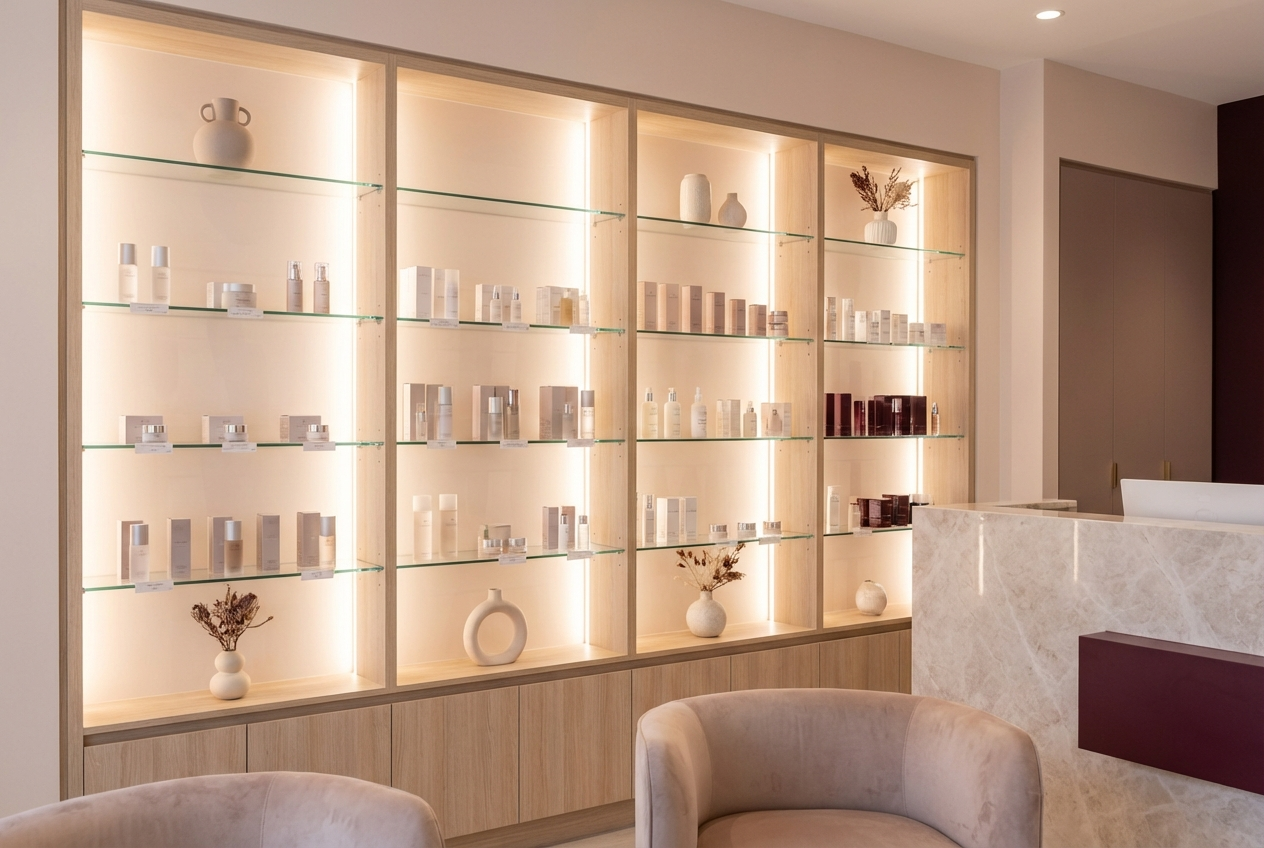
Retail sales can be a meaningful revenue stream for aesthetic practices, but they rarely grow on their own.
One of the biggest misconceptions in aesthetics is that simply placing skincare on a shelf is enough to generate sales. In reality, retail performs best when the display, the patient experience, and the provider recommendation all work together.
If your team believes in the products but your retail area feels cluttered, inaccessible, or easy to ignore, you may be losing sales before the conversation even starts.
A strong retail display does more than hold products. It signals credibility, reinforces your recommendations, and makes it easier for patients to say yes before they leave the office.
If your skincare retail area needs a refresh, start here.
Why retail display matters in an aesthetic practice
Patients are constantly reading the room.
A clean, organized, well-stocked display helps communicate that your practice stands behind the products it recommends. On the other hand, empty shelves, hidden products, or locked cabinets can create friction and uncertainty.
Think about any retail environment you trust. Products are visible. Bestsellers are easy to find. Shoppers can explore without feeling awkward or inconvenienced.
The same principle applies in aesthetics. When retail feels intentional and easy to shop, patients are more likely to browse, ask questions, and purchase.
1. Keep your shelves stocked, but not overcrowded
The number of products on display matters.
If the shelf looks sparse, patients may assume products are old, unpopular, or not a meaningful part of your business. If it looks overcrowded, the display can feel messy and overwhelming.
A practical rule is to keep enough product out to make the display look active and maintained without making it feel cluttered. In many cases, having a few units of each featured product on display is enough to create a healthy, shoppable look.
Just as important: make products easy to access.
If patients have to ask someone to unlock a cabinet or retrieve a product from a drawer, that extra step can lower purchase intent. Skincare should feel approachable, not guarded.
What to check:
Are shelves full enough to look healthy and intentional?
Are products easy to reach?
Does the display feel clean and edited rather than crowded?
2. Put your testers out
Testers are one of the easiest ways to improve retail performance.
When patients can touch a moisturizer, pump a serum, or experience the texture of a product themselves, the recommendation becomes more tangible. That sensory interaction can help move someone from curiosity to confidence.
Practices sometimes avoid putting testers out because they worry about waste or theft. In most cases, that fear costs more than it saves. Patients are more likely to buy products they can experience firsthand, and many skincare reps can help support practices with tester units.
If you want patients to engage with retail, make it interactive.
Best practices for testers:
Keep testers visible and easy to identify
Replace messy or empty testers quickly
Wipe down the area often so it always feels clean
Train staff to invite patients to try hero products during checkout or post-treatment conversations
3. Use eye-level placement strategically
Not every product deserves the same shelf position.
The products you most want to sell should sit where patients can actually see them. Eye-level placement is valuable real estate, and it should usually be reserved for high-priority products such as treatment serums, corrective products, or top-margin favorites.
Lower-commitment items like cleansers, lip products, or smaller add-ons can still perform well in secondary placement areas such as checkout, treatment room counters, or gift-with-purchase moments.
The goal is to make your most important products the easiest ones to notice.
Think strategically about placement:
Put hero products at eye level
Group products by concern, routine, or category
Use signage sparingly and only where it adds clarity
Avoid overdecorating the retail space
A good rule: the display should support the products, not compete with them.
A simple retail display checklist for aesthetic practices
If you want a quick retail reset, start here:
Make sure the display looks stocked and maintained
Remove unnecessary clutter
Put testers out and keep them clean
Move priority products to eye level
Make shopping feel easy and natural
Train your team to reinforce product recommendations verbally
Final thought
Retail success in aesthetics is not just about what you sell. It is about how confidently and consistently you present it.
When your display feels organized, accessible, and intentional, it becomes easier for patients to trust your recommendations and easier for your team to support the sale.
Small changes in presentation can make a meaningful difference in retail performance, especially when paired with strong patient education and a staff that knows how to guide the conversation.