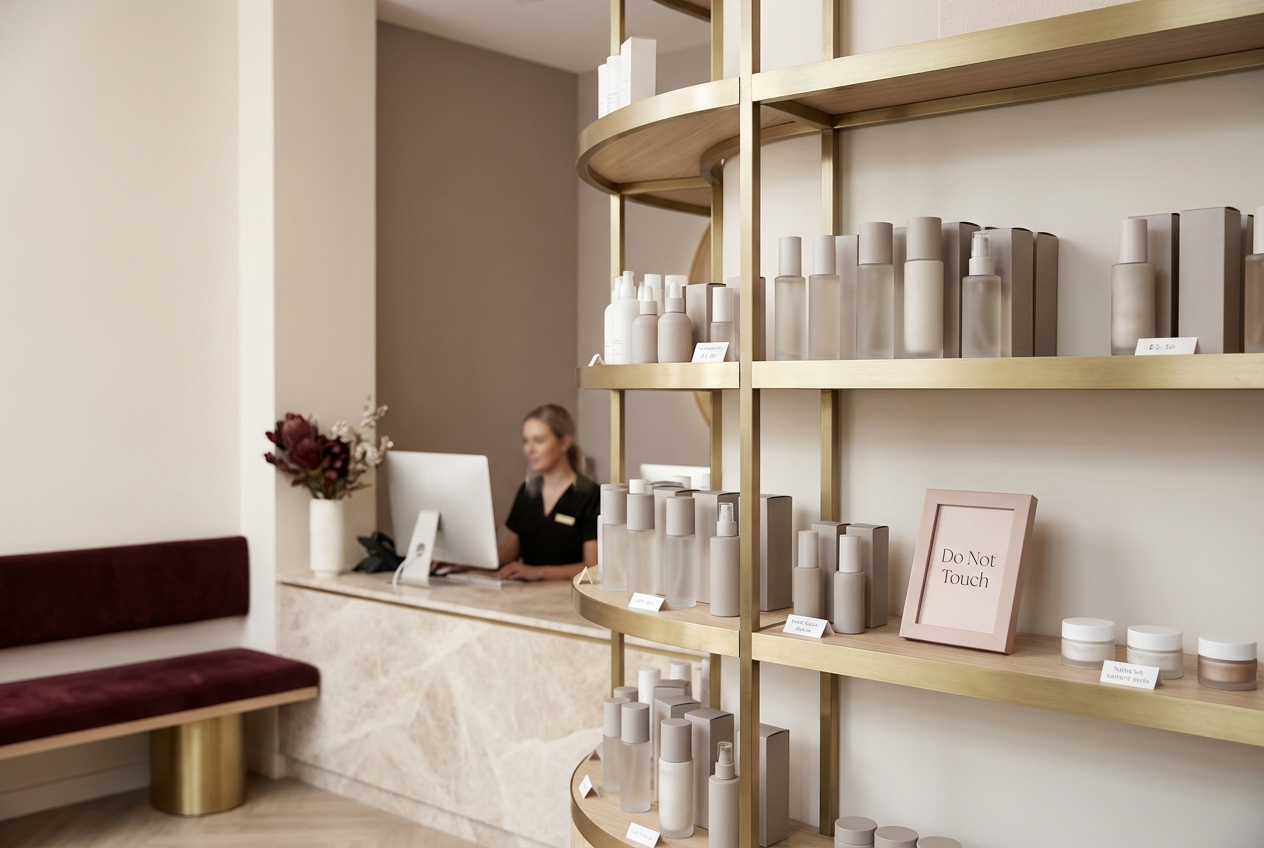
When skincare retail starts performing well, the opportunity is bigger than just adding another line item to the monthly revenue report.
Done strategically, retail revenue can help fund growth across the rest of the practice.
That is where many businesses miss the bigger picture. They focus on the immediate win of stronger product sales, but do not always think through how those dollars can be reinvested to improve capacity, patient experience, and long-term performance.
If you want skincare retail to support sustainable growth, reinvestment matters.
Here are three of the smartest places to direct that revenue inside an aesthetic practice.
1. Strengthen your treatment offering
Services are still the core of most aesthetic practices.
That means one of the most strategic uses of additional retail revenue is reinvesting in the treatment side of the business, whether that means upgrading equipment, improving existing service delivery, or expanding into new offerings that align with patient demand.
This type of reinvestment can create a compounding effect.
When the treatment menu becomes stronger, the patient experience improves. When the patient experience improves, trust grows. And when trust grows, it often becomes easier to recommend supportive skincare that extends results at home.
In other words, retail can help strengthen services, and stronger services can help support even better retail performance.
Examples of reinvestment in this area might include:
upgrading aging equipment
adding technology that supports a growing category of demand
improving treatment-room tools or workflow
expanding into services that pair naturally with homecare recommendations
2. Invest in team capacity and staff development
Growth creates pressure.
As patient demand increases, many practices feel the strain before they fully understand what is happening. Schedules get tighter. Staff members get stretched. Follow-up becomes inconsistent. The patient experience can start to slip.
That is why staffing is one of the smartest areas to reinvest in.
Retail revenue can help support:
additional hiring
better training
stronger patient coordination
improved support for providers
a more consistent front desk and checkout experience
It can also create room for more intentional staff education around skincare recommendations, product knowledge, and patient communication.
When your team has the time, clarity, and training to support both services and retail well, the practice becomes easier to scale.
3. Build the systems that support future growth
Once core services and staffing are supported, retail revenue can also be reinvested into the surrounding systems that help the business grow more efficiently.
This is often where practices create the next level of momentum.
A few smart reinvestment opportunities include:
Improve the retail experience
If your practice has only been selling skincare casually or from a small shelf behind the desk, reinvesting into a more intentional retail space can make a real difference.
A better retail area can:
make products easier to browse
support stronger merchandising
reinforce brand trust
create more natural product discovery before and after appointments
Create smarter staff incentives
If retail is going to be a team effort, the team should feel invested in its success.
A thoughtful incentive structure can encourage consistency, improve buy-in, and make product recommendations feel like part of a shared goal rather than an awkward extra responsibility.
The key is to reward the right behaviors, not just one-off sales.
Support expansion opportunities
In some practices, strong retail performance can also help support larger growth goals over time, including marketing upgrades, expanded square footage, or eventually opening an additional location.
Retail may not be the only factor funding that growth, but it can absolutely become part of the engine behind it.
Why reinvestment matters
The real value of skincare retail is not just the transaction itself.
It is what that revenue makes possible when it is used intentionally.
Instead of seeing retail as “extra,” practices should think of it as a category that can help strengthen the broader business when managed well. The more strategically you reinvest, the more likely retail is to support long-term practice growth rather than short-term wins alone.
Final thought
Skincare retail revenue can do more than increase monthly sales.
It can help fund stronger services, support a better team experience, and build the systems that make future growth possible.
That is when retail becomes more than a shelf of products in the lobby.
It becomes a meaningful contributor to the long-term health of the practice.