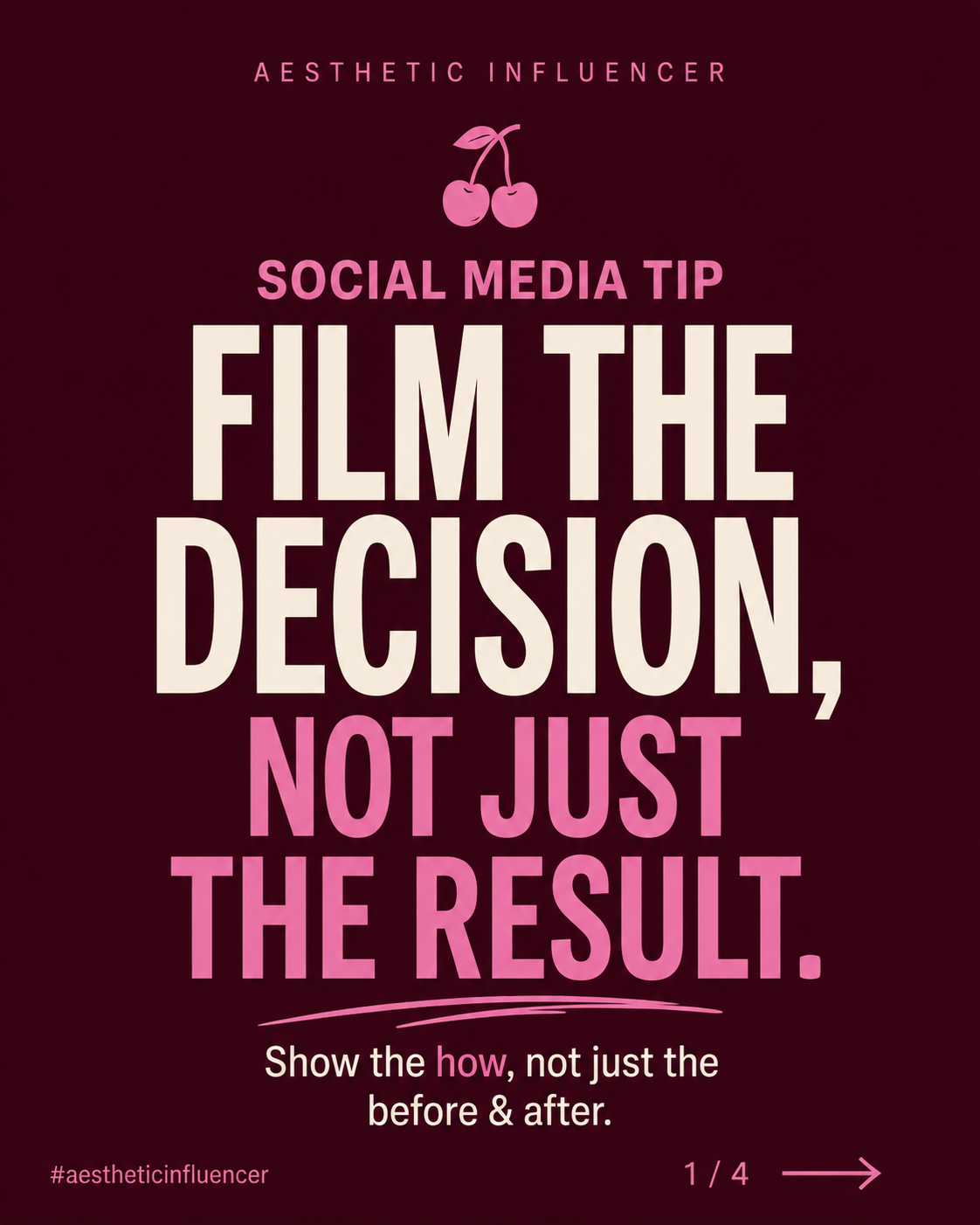
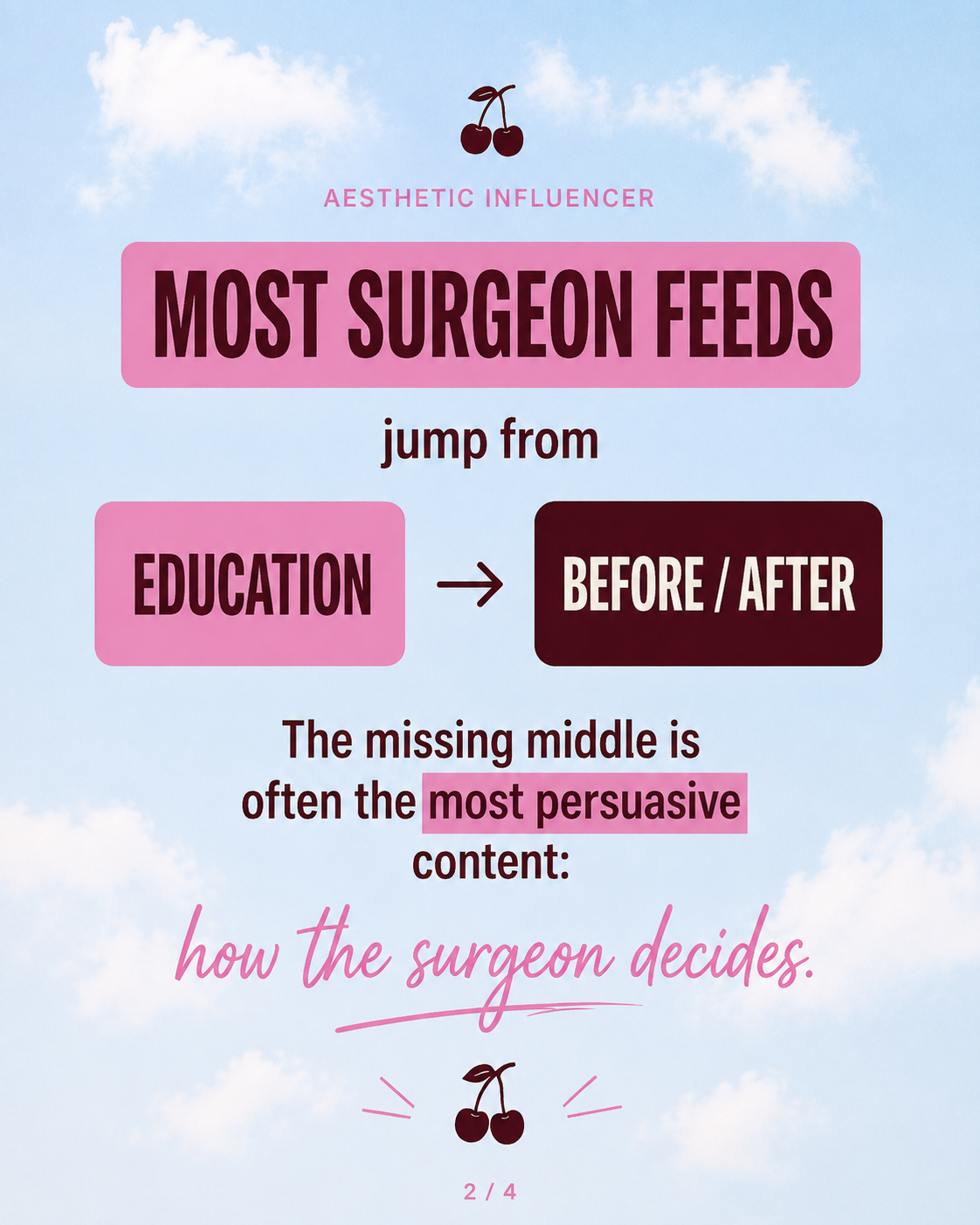
Most plastic surgery content follows the same pattern:
Education → before-and-after.
And while both are useful, there’s often a missing middle.
The decision.
That’s usually where the most persuasive content lives.
Patients don’t just want to know what you do. They want to understand how you think.
Why would you choose one procedure over another?
What makes you decide someone is not a good candidate?
What are you looking at before you recommend surgery, filler, fat transfer, a device, or nothing at all?
A before-and-after can show your result.
Decision-making content shows your judgment.
And judgment is what builds authority.
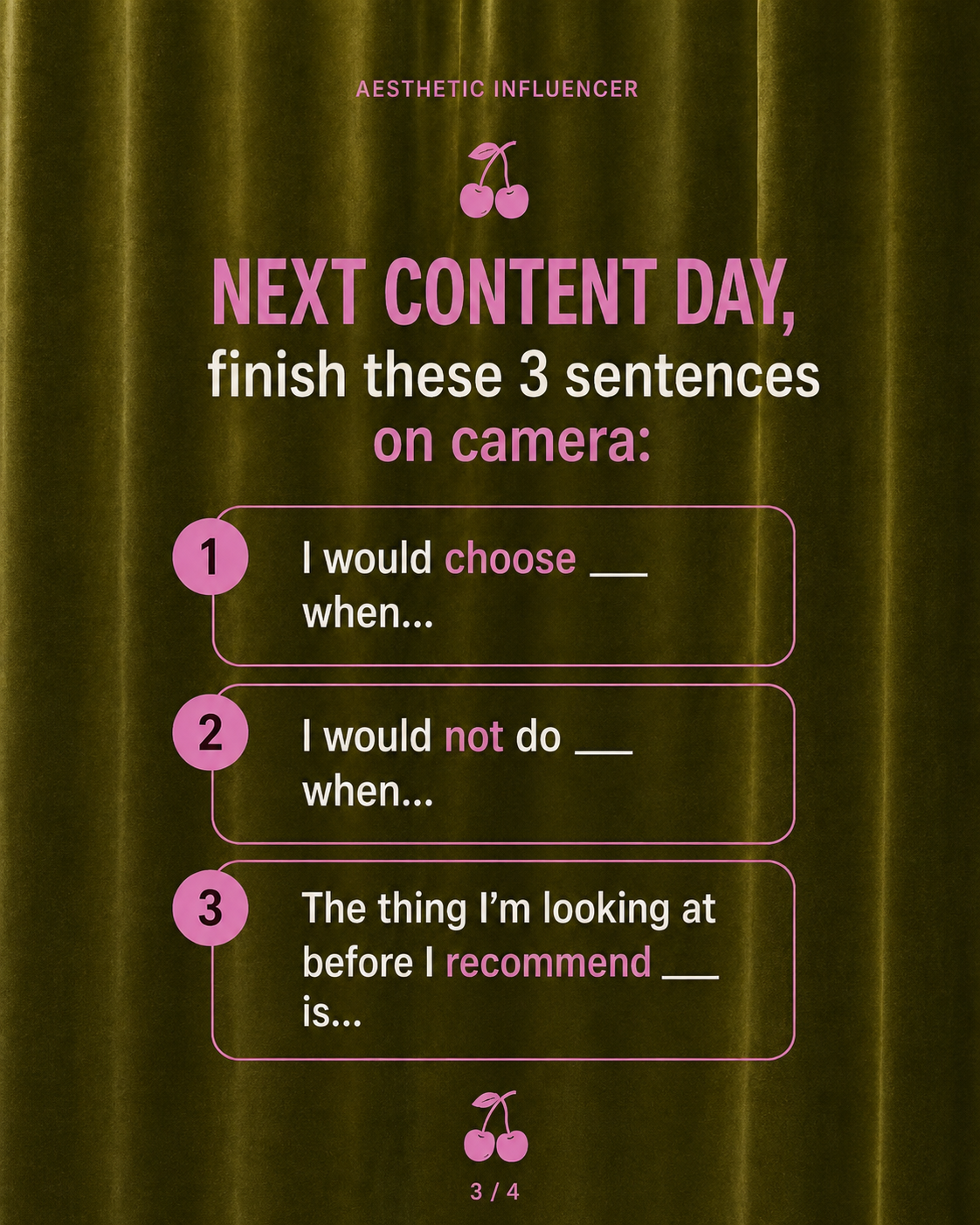
Try this on your next content day
Finish these three sentences on camera:
I would choose ___ when…
I would not do ___ when…
The thing I’m looking at before I recommend ___ is…
That’s it.
You don’t need a complicated script or a trending format. You’re simply letting the patient hear the thought process that normally stays inside the consultation room.
One answer can easily become its own Reel.
For example:
“I would choose a breast lift without an implant when…”
“I would not add more filler when…”
“The thing I’m looking at before I recommend a facelift is…”
“I would choose liposuction instead of a tummy tuck when…”
“I would not recommend a laser treatment when…”
The procedure changes. The content structure stays the same.
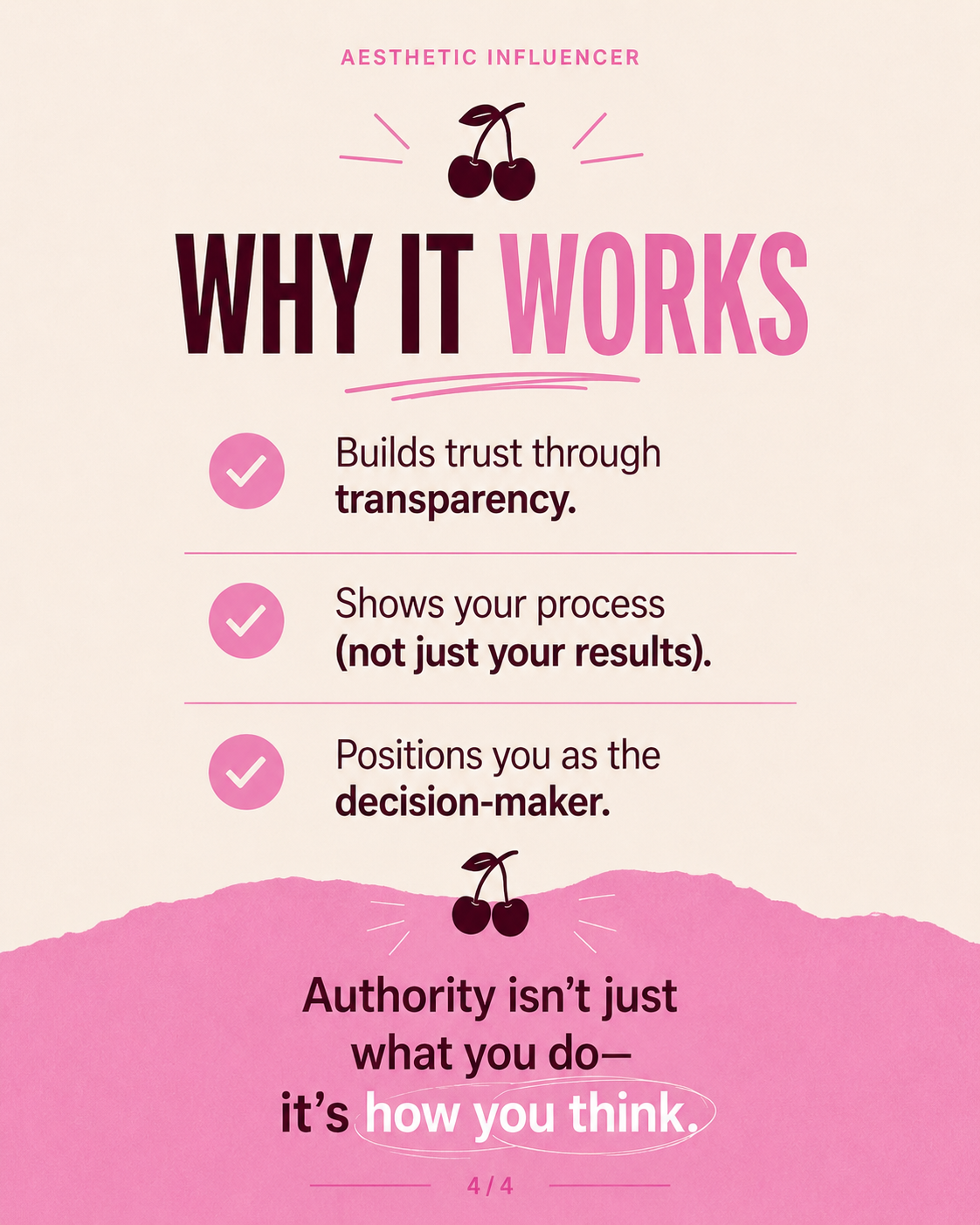
Why this works
Aesthetic content often focuses heavily on proof.
Credentials. Results. Before-and-afters. Testimonials.
But another form of proof is how you arrive at the recommendation.
When you explain the criteria behind a decision, you show patients that treatment isn’t automatic.
You’re assessing.
Comparing.
Deciding.
Sometimes saying no.
That transparency makes the content feel less like promotion and more like expertise.
It also gives prospective patients something they can’t get from scrolling through a gallery of beautiful outcomes: an understanding of what it might actually feel like to be evaluated by you.
The content opportunity most practices miss
If every post is either:
“Here’s what a facelift is.”
or
“Here’s my facelift result.”
you’re leaving a lot of your expertise off-camera.
The more interesting question is often:
Why did you choose that facelift for that patient in the first place?
That is the part patients are trying to understand when they compare providers.
Not just:
“Can this surgeon get a good result?”
But:
“Will this surgeon know what I need?”
That is a different kind of trust.
And it’s much harder for a competitor to replicate.
The shift
Don’t only film what you know.
Film how you decide.
Because authority isn’t just what you do.
It’s how you think.