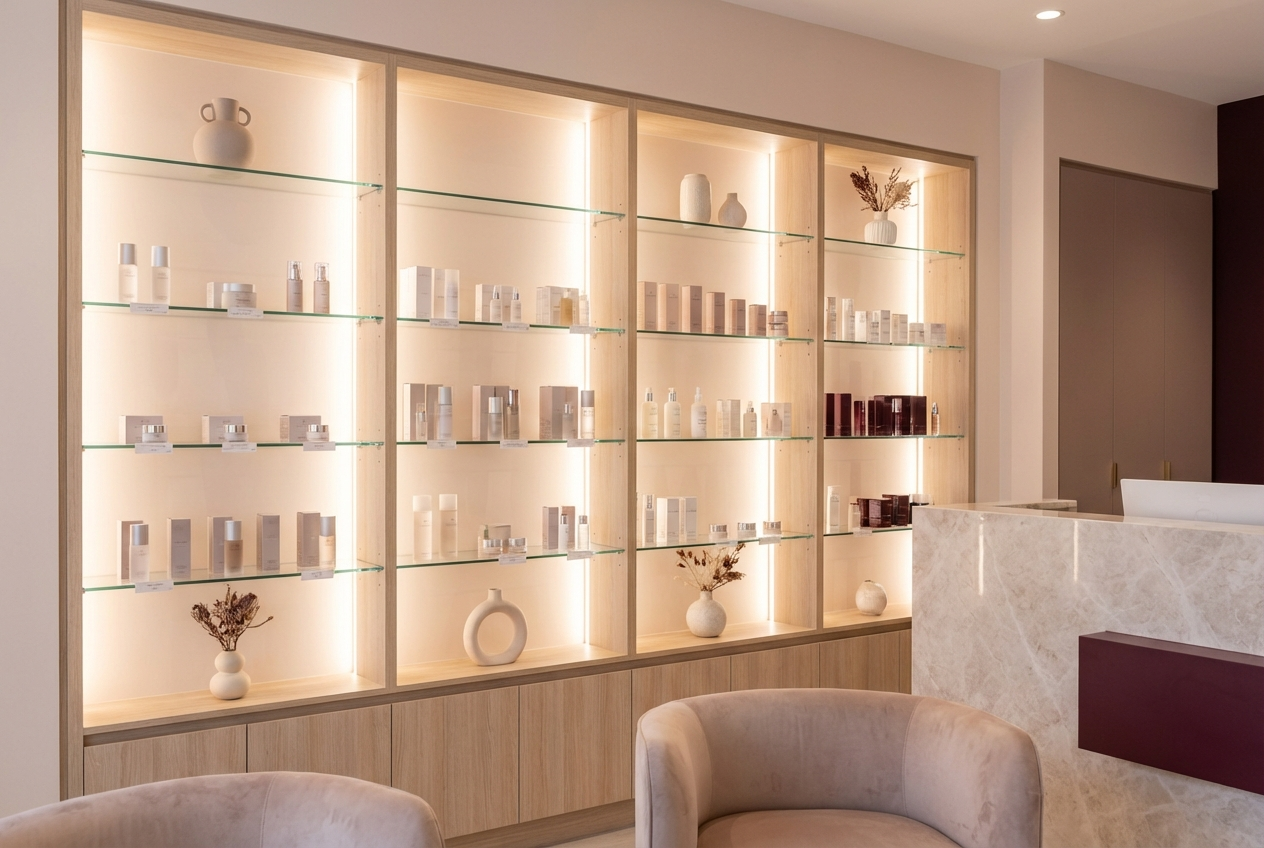
One of the most common reasons skincare retail underperforms in aesthetic practices is simple:
It is not treated like a real part of the business.
Many practices carry skincare. Fewer have a clear plan for how that category is supposed to grow, what role it plays in revenue, how it connects to treatments, or how the team is expected to support it.
That gap matters.
Because if retail is only treated as a side shelf, an occasional add-on, or a nice extra at checkout, it will usually perform like one.
If you want skincare retail to become a meaningful and sustainable revenue stream, it needs to be approached with the same level of intention as any other part of the practice.
Retail needs its own strategy
Retail should absolutely connect to your broader business model, but it should not be buried inside it.
The biggest mistake practices make is assuming skincare will grow simply because the products are available. In reality, retail performs best when there is a dedicated plan behind it.
That plan does not need to be overly complicated. But it should answer a few important questions:
What role should skincare retail play in the business?
How much revenue should it contribute?
Which products are priorities?
How will the team recommend and support them?
How will retail be promoted across the patient journey?
When those questions are left unanswered, practices often end up overbuying inventory, undertraining staff, and hoping product sales happen organically.
Start with the goal, not the inventory
One of the smartest ways to build a retail plan is to start with the outcome you want.
Ask yourself:
What percentage of practice revenue should come from skincare retail?
From there, break that number down into monthly, weekly, and daily targets. Once you understand what success actually looks like, it becomes easier to build a plan around it.
This step matters because it shifts retail from a vague idea into something measurable.
Instead of saying, “We want to sell more skincare,” you are defining what “more” actually means for your business.
Then reverse engineer the rest
Once you know the goal, you can work backward and build the systems that support it.
1. Inventory and merchandising
Many practices make the mistake of purchasing too much inventory before they have a real strategy for moving it.
That approach can tie up cash, create pressure to push products in the wrong way, and leave the practice stuck with items that are not turning.
A better approach is to let your goals guide your inventory decisions.
Ask:
How much product do we realistically need on hand?
Which products support our most common treatments and concerns?
Which items deserve prime shelf placement?
What display setup makes the products easiest to understand and shop?
2. Team education
Retail performance is rarely about inventory alone. It is also about whether the team knows how to talk about the products clearly and confidently.
That means staff should understand:
what each product does
who it is for
how to use it
how it supports treatment outcomes
how to make the recommendation feel natural and aligned with patient goals
If the team is unsure, inconsistent, or hesitant, retail will stall no matter how good the products are.
3. Patient recommendation process
A strong retail strategy includes a clear plan for how products are recommended throughout the patient experience.
That may include:
provider recommendations in the treatment room
nurse or aesthetician education during the visit
front desk reinforcement at checkout
follow-up communication after the appointment
Retail tends to perform better when it feels like part of patient care rather than a last-minute sales push.
4. Promotions and marketing
Retail should also have a place in your larger marketing calendar.
That does not mean constant discounts. It means being intentional about when and how you spotlight products through:
seasonal campaigns
treatment pairings
staff favorites
regimen education
post-procedure recovery guidance
email and social content
When skincare is consistently woven into patient education and practice marketing, it becomes easier for patients to understand its value.
Why this matters
When practices skip the planning stage, they often end up reacting instead of leading.
They buy too much. They promote inconsistently. They rely on a few team members to carry the category. And they wonder why retail never becomes a stronger part of the business.
But when retail has a clear goal, a realistic plan, and team-wide support, it can become much more than an extra offering.
It can become a more predictable revenue channel and a stronger extension of the care experience you already provide.
Final thought
The number one retail rule aesthetic practices should not ignore is this:
Do not treat skincare retail like an afterthought.
Treat it like a real business unit with goals, systems, and accountability.
Because once you do that, it becomes much easier to make smarter inventory decisions, train your team more effectively, and build a retail program that actually supports long-term growth.